Gen. Abdulsalami Abubakar-led National Peace Committee (NPC) yesterday corrected a claim by African Democratic Congress (ADC) presidential candidate, Atiku Abubakar, that the ruling All Progressives Congress (APC) has always failed to participate in the peace accord signing process.
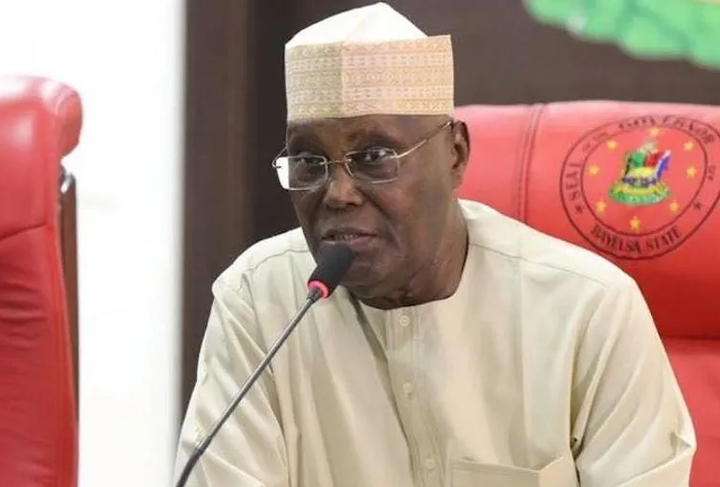
Atiku, on Monday, said he refused to attend the recent Peace Accord signing for the presidential candidates in the 2027 elections because the ruling party had always refused to attend.
The former vice president stated this when the Council of the Wise of the Savannah Centre for Democracy, Diplomacy and Development (SCDDD), led by a former Chief Justice of Nigeria, Justice Olukayode Ariwoola, visited him in Abuja as part of its engagement with political stakeholders ahead of the 2027 general elections.
The Peace Accord, organised by the NPC in partnership with the Kukah Centre, is designed to ensure that political parties, candidates and their supporters commit to peaceful campaigns, respect for electoral institutions and issue-based engagement.
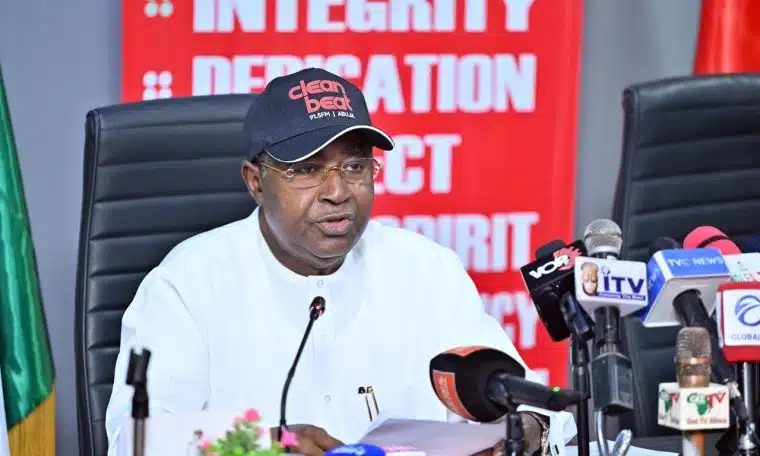
However, when asked by LEADERSHIP about the claim made by Atiku, Executive Director of the Kukah Centre and Head of Secretariat, National Peace Committee, Fr. Atta Barkindo, noted that the ruling party and opposition parties have always participated in the peace accord signing exercise.
He said, “Before the 2015 general elections, the Peace Committee had only one peace accord. Both Jonathan and Buhari signed (party in power and opposition). Before the 2019 elections, the Peace Committee established two accords – the first for issue-based campaigns and the second to accept the outcome of the vote.
“Buhari came to sign the first and Atiku was absent. He came to sign later at the Peace Committee secretariat. For the second signing, both Atiku and Buhari came to sign (party in power and opposition).
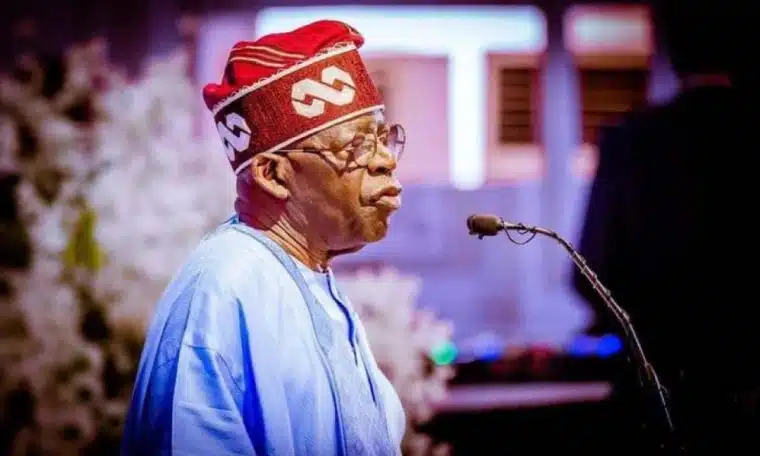
“Before the 2023 elections, Atiku came to sign the first one, but Tinubu did not come (Tinubu was not in power then, but his party was). For the second signing, both of them came to sign (party in power – not candidate in power and the opposition). Before the 2027 elections, both Atiku and Tinubu did not attend the first signing (party in power and opposition),” he said.
Speaking with the Council of the Wise of the Savannah Centre for Democracy, Diplomacy and Development (SCDDD), Atiku said, “I used to be a signatory to what is this Peace Committee. I started boycotting it last election until our former Head of State, General Abdulsalami, had to plead with me.
“I said, but it is one-sided. It is always the opposition parties that attend. The ruling party is never, never a participatory signatory to this Peace Committee. And if they are not, what is the point of my coming to sign?
“That is why even the last one (held last week), I refused to attend because it is one-sided. This is one challenge I think that we need to correct,” he said.
Among those who signed the Peace Accord were Peter Obi of the Nigeria Democratic Congress (NDC), Omoyele Sowore of the African Action Congress (AAC), and Adewole Adebayo of the Social Democratic Party (SDP).
Atiku, however, told the Ariwoola-led council that the responsibility for ensuring peaceful, free and credible elections should not be placed solely on politicians.
He argued that the government and the three arms of government also had important roles to play in the electoral process.
“The issue of peaceful conduct of elections should not be limited to only the political class. Now we have seen that all three arms of government may be complicit,” he said.
“Therefore, I will want to appeal to this noble and respectable body to make sure that there is no selective audience. Because we are not the only players. Not only the politicians are the players. The government is also a player. All the three branches, the legislative, the executive, the judiciary, are all players in a free, fair and credible election.”
Meanwhile, the Civil Society Legislative Advocacy Centre (CISLAC) backed Atiku over his concerns about the one-sided nature of the National Peace Accord ahead of the 2027 general elections.
CISLAC said the former vice president’s concerns had raised an important question about the credibility and inclusiveness of the peace process, stressing that every political party, candidate and institution involved in the electoral process must demonstrate equal commitment to the principles of the accord.
Executive Director of CISLAC, Auwal Musa Rafsanjani, said Atiku’s criticism should provide an opportunity for the National Peace Committee to review the effectiveness and credibility of the Peace Accord mechanism.
CISLAC said the focus should not be limited to whether political candidates attend a ceremony and append their signatures to the agreement, but should also include whether they genuinely respect the commitments they make.
“A Peace Accord should not become a ceremonial exercise where political leaders sign documents before cameras and subsequently tolerate hate speech, political intimidation, electoral violence, vote-buying, misinformation or the use of state institutions against political opponents,” the organisation said.
It urged the National Peace Committee to ensure that all presidential candidates, particularly candidates of ruling parties at both the federal and state levels, are visibly and equally committed to the process.
According to CISLAC, the personal participation of principal candidates, wherever reasonably possible, would strengthen public confidence in the process.
“Personal participation by principal candidates, wherever reasonably possible, would strengthen public confidence and demonstrate that no political actor considers himself above the process,” it said.
The civil society organisation also called for sanctions against violations of the accord, urging the National Peace Committee to establish a transparent mechanism for monitoring compliance.
It said political parties and candidates whose supporters repeatedly engage in violence, intimidation, hate speech or other acts contrary to their commitments should be publicly identified.
CISLAC further argued that responsibility for peaceful elections should not rest solely on political parties, noting that the Independent National Electoral Commission (INEC), police, other security agencies, the judiciary, the Federal Government and state governments all have constitutional responsibilities in creating an environment conducive to free and peaceful elections.
The organisation particularly urged security agencies to demonstrate political neutrality and ensure that the law applies equally to ruling and opposition parties.
“Political parties should also understand that signing a Peace Accord cannot substitute for obedience to the Electoral Act and other laws of the country. Electoral violence and intimidation are matters of law enforcement, not merely breaches of a gentleman’s agreement,” CISLAC said.
The group also urged Atiku and other presidential candidates to continue engaging with the National Peace Committee rather than abandoning the mechanism.
It said political actors should push for reforms where shortcomings exist while remaining committed to peaceful and issue-based political participation.
“Boycotting the Peace Accord may send a political message, but sustained engagement offers a greater opportunity to strengthen the institution and hold every participant accountable,” the organisation said.
Ahead of the 2027 elections, CISLAC said Nigerians needed more than photographs of politicians signing peace agreements, calling for measurable commitments, equal treatment of political actors, impartial security agencies, responsible campaigns, sanctions for electoral violence and credible institutions capable of enforcing electoral rules.
The organisation said the responsibility for peaceful and credible elections must be shared by all stakeholders.
“Ultimately, peace cannot be the responsibility of the opposition alone, nor can credible elections be the responsibility of INEC alone. Every candidate, political party, public institution and security agency must be held to the same standards.”
CISLAC added that the credibility of the 2027 elections would ultimately depend on how political actors conduct themselves beyond the signing of the accord.
“The integrity of the 2027 elections will depend not simply on who signs the Peace Accord, but on who respects it when political competition becomes difficult,” it said.