
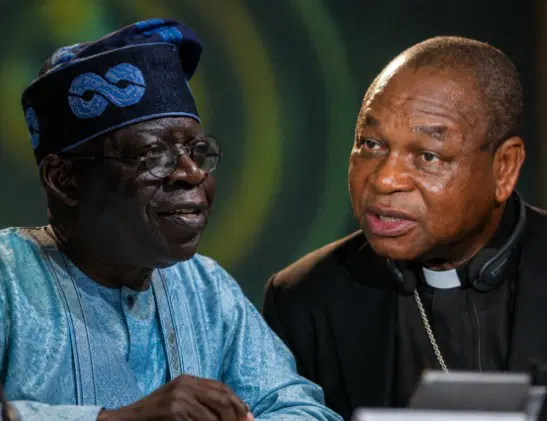
Cardinal John Onaiyekan has blamed individuals he described as the Nigerian government’s “attack dogs” for fuelling the controversy surrounding his comments on the All Progressives Congress (APC) and the 2027 general elections.
The Catholic cleric said the reactions from government supporters attracted more public attention than his original interview with Arise Television, during which he expressed concerns that the APC-led administration was determined to win the 2027 elections by all means.
Onaiyekan made the clarification during an interview on the Naija Unfiltered Podcast, where he discussed the backlash that followed his conversation with Arise TV journalist Charles Aniagolu.
According to the cardinal, his initial remarks reflected concerns previously communicated by Catholic bishops during their meeting with President Bola Tinubu. He explained that he had been invited to elaborate on the position adopted by his fellow bishops and fully supported the issues they raised.
“Everything that happened at that interview was not coming from me. I was invited to expatiate on the position that my brother bishops took when we went to visit the president of the country,” Onaiyekan said.
Onaiyekan Blames Government Allies for Fuelling Controversy
The cardinal argued that the controversy surrounding his interview was amplified by statements from individuals associated with the government.
He suggested that their responses were counterproductive and contributed to the public outrage and wider debate that followed his comments.
“I think the main reason was because — I don’t know what pushed them — some of what they call the attack dogs of the government went out of their ways to make certain statements that were not helpful even for government,” he said.
Onaiyekan added that the interventions provoked Nigerians and generated further discussion, although he decided not to issue another response.
His comments come amid political discussions surrounding the 2027 general elections and concerns about the direction of the country’s leadership.
Why Catholic Bishops Raised Concerns With Tinubu
Onaiyekan also revisited the meeting between President Tinubu and Catholic bishops, explaining that their visit was intended to communicate the concerns of Nigerians rather than offer praise to the administration.
He recalled telling Aniagolu that Tinubu was unhappy with the message delivered by the bishops. However, he maintained that they had not expected the president to welcome their concerns enthusiastically.
The cardinal said the bishops considered it their responsibility to speak honestly about the situation in the country, even if their message was uncomfortable for the president.
“We were not expecting Mr President to be happy with us. We knew he was not going to be happy with what we were saying, but we felt that we don’t have to be going there to make him happy when Nigerians, in the vast majority, are not happy,” he said.
His remarks underscore his position that religious leaders should be able to communicate the concerns of citizens to those in authority without being expected to flatter political officeholders.
Onaiyekan Questions Government’s Response to Nigerians’ Suffering
Beyond the controversy surrounding the interview, Onaiyekan criticised what he described as the failure of the country’s leadership to adequately respond to the realities facing Nigerians.
He argued that government officials could not reasonably claim ignorance of the challenges confronting citizens, given the extensive media coverage of the country’s difficulties.
“There is no governor, unless we have a president who is deaf, dumb, and blind, who can tell us that he’s not hearing the truth about what is happening in Nigeria,” the cardinal said.
He also questioned how government policies could be regarded as successful if their effects did not translate into better living conditions for ordinary Nigerians.
According to him, the effectiveness of any administration should be assessed by its impact on citizens, particularly those facing the greatest economic and social difficulties.
“The proof of its validity must be seen in the life, daily life of the people, and especially of the poorest,” he added.
Citizens’ Welfare Should Determine Policy Success
Onaiyekan’s comments place the welfare of Nigerians at the centre of the debate over government performance and political leadership ahead of the 2027 elections.
His position is that policies should not be judged solely by official explanations or government claims but by tangible improvements in people’s everyday lives.
The cardinal’s intervention also highlights the wider debate over public criticism, political accountability and the responsibility of leaders to listen to opposing views.
While the controversy over his election-related remarks has attracted significant attention, Onaiyekan maintained that the underlying concerns raised by the Catholic bishops remain important.
His comments serve as a reminder that public confidence in government depends not only on political promises but also on whether citizens experience meaningful improvements in their living conditions.