
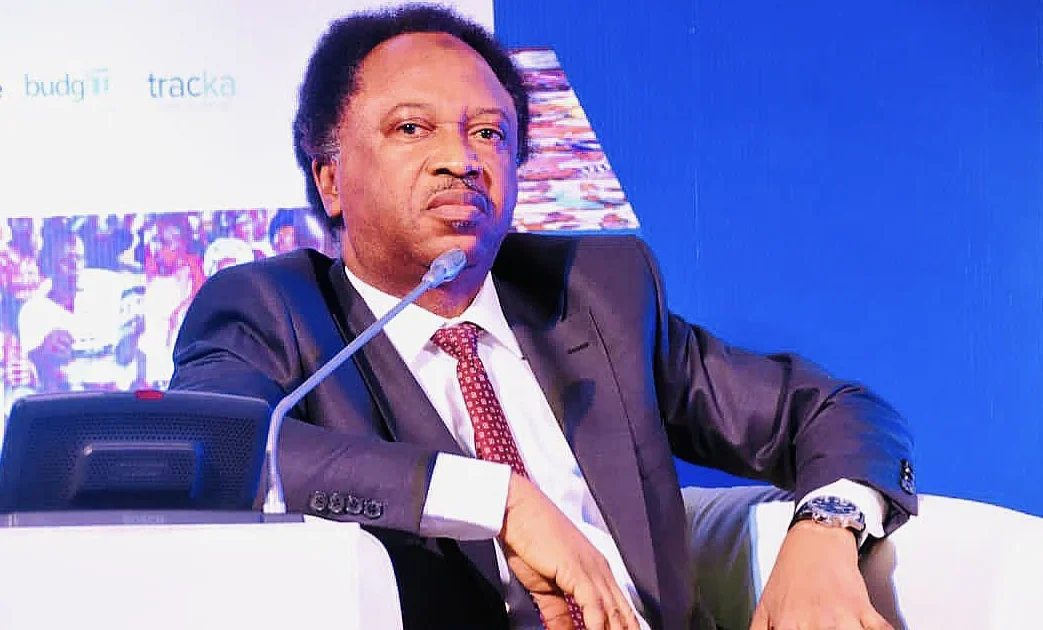
Former Kaduna Central Senator Shehu Sani has urged Northern politicians to allow President Bola Ahmed Tinubu to complete his second term in office, warning that attempts to reclaim the presidency in 2027 could intensify separatist agitations in different parts of Nigeria.
Sani made the appeal while speaking to journalists in Kaduna on Friday, arguing that respecting the country’s informal power rotation arrangement would help preserve national unity, political stability and a sense of inclusion among Nigeria’s diverse regions.
According to the former lawmaker, Northern politicians should wait until 2031 before pursuing their presidential ambitions, rather than seeking to take over the presidency in the 2027 general election.
He cautioned that abandoning the power-sharing understanding could undermine the relative decline in separatist movements across the South-East, South-West and South-South.
Shehu Sani Links Power Rotation to National Unity
Sani argued that the rotation of presidential power between the North and South has contributed to reducing tensions in parts of the country by giving different regions hope of participating in national leadership.
He cited the Biafra agitation in the South-East, stating that the prospect of a presidential candidate from the region has helped reduce the intensity of separatist demands.
“The danger of disrupting this rotational idea is the fact that whatever you are doing to Tinubu for ethnic reasons, Tinubu must go,” Sani said.
He added that the agitation for Biafra had reached one of its lowest points because people in the region were hopeful that one of their own could contest for Nigeria’s presidency.
The former senator also pointed to agitations for a Yoruba republic and greater autonomy in the Niger Delta, arguing that the decline in such demands could be reversed if political arrangements were perceived as unfair or exclusionary.
Sani questioned how any Nigerian president could govern effectively if significant sections of the country believed they had been denied a fair opportunity to participate in the nation’s leadership.
His position is that maintaining a sense of political inclusion remains important to Nigeria’s unity, particularly as political parties and aspirants begin positioning themselves ahead of the 2027 elections.
Why Shehu Sani Says the North Should Wait Until 2031
Explaining his position, Sani recalled that former President Muhammadu Buhari, who came from the North, served two terms between 2015 and 2023.
He argued that Buhari’s eight years in office provided a basis for the South to retain the presidency for two terms under the informal power rotation principle.
“The principle of rotation of power makes it clear that Buhari has been in power for eight years, so it is only logical and rational that you have a southerner,” he said.
Tinubu, who took office in May 2023, is eligible to seek a second term in the 2027 presidential election under Nigeria’s constitutional framework, subject to the applicable electoral requirements.
Sani’s appeal is therefore directed at Northern politicians who may be considering a presidential bid in 2027, urging them to respect the existing political understanding and allow the South to complete its expected eight-year spell before the presidency returns to the North.
However, Nigeria’s power rotation arrangement is an informal political convention rather than a constitutional requirement. The Constitution sets the formal eligibility conditions and tenure limits for the presidency.
Shehu Sani Questions Atiku Abubakar’s Presidential Ambition
Sani also questioned some of the political arguments surrounding former Vice-President Atiku Abubakar’s continued presidential ambition.
He recalled Atiku’s previous attempts to become president, including contests involving former Presidents Olusegun Obasanjo, Umaru Musa Yar’Adua, Goodluck Jonathan and Muhammadu Buhari.
His comments come amid growing political discussions about potential contenders and the regional balance of power ahead of the 2027 general election.
The debate over zoning and power rotation has remained a recurring feature of Nigerian politics, with supporters arguing that it promotes inclusion and national cohesion, while others maintain that presidential contests should be determined by constitutional eligibility, party processes and voters.
For Sani, the immediate priority should be preserving the existing power-sharing understanding and avoiding political decisions that could deepen regional grievances.
He maintained that the North has no compelling reason to demand an immediate return to the presidency, given Buhari’s eight years in office and the South’s current turn under Tinubu.
As political alignments ahead of 2027 continue to evolve, the debate over zoning, national unity and the future of Nigeria’s presidency is likely to remain a major issue among political stakeholders.