
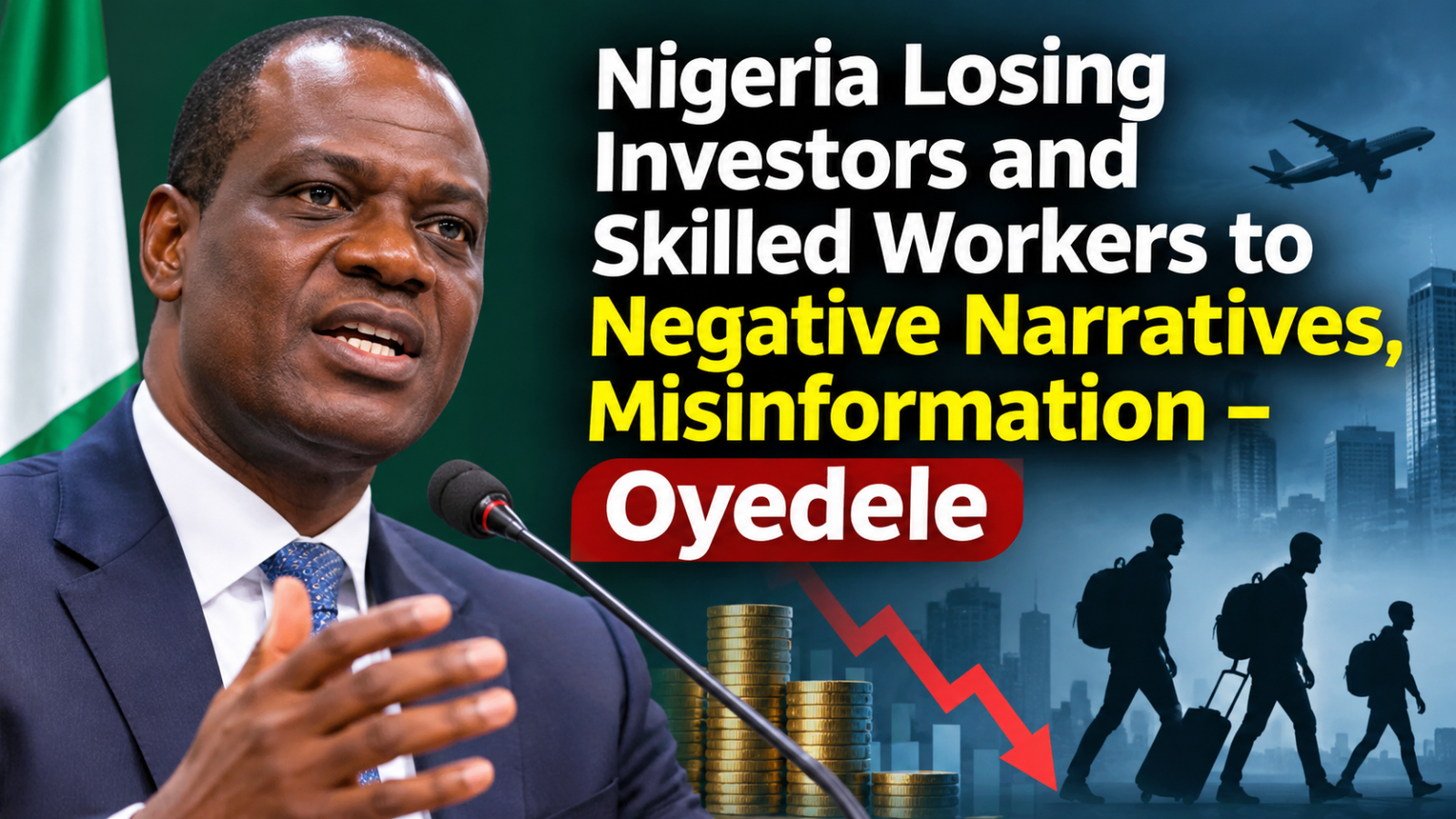
Nigeria is paying a heavy economic price for negative narratives, misinformation and damaging perceptions about the country, the Minister of Finance and Coordinating Minister of the Economy, Taiwo Oyedele, has warned.
Oyedele said negative perceptions about Nigeria go beyond reputational damage, as they discourage foreign investment, constrain business expansion and encourage skilled Nigerians to seek opportunities abroad.
The minister spoke on Tuesday at the ongoing 2026 World Public Relations Forum (WPRF) in Abuja, where he identified public trust as a critical factor in attracting investment, sustaining businesses and securing citizens’ support for government policies.
According to him, trust is the foundation of economic activities, influencing whether citizens cooperate with government, investors commit capital and businesses expand their operations.
He explained that when public trust is strong, economic policies receive greater acceptance and investors are more willing to commit resources. However, weak trust creates suspicion, making it difficult for even well-designed policies to gain public support.
“Trust is the one currency that sits beneath all the other currencies. When trust is strong, citizens cooperate, capital flows, businesses invest, and reforms get a fair hearing. When trust is weak, even sound policies meet suspicion, and every explanation sounds like an excuse,” he said.
Negative Perceptions Affecting Nigeria’s Economy
Oyedele warned that the economic consequences of negative narratives are often underestimated, noting that persistent stories portraying Nigeria as a failed country could undermine investor confidence and weaken its economic prospects.
He referenced expressions such as “Nigeria is finished”, “Nigeria is a scam” and “Nigeria happened to me”, saying such narratives could influence investment decisions and discourage businesses from expanding in the country.
According to the minister, investors may demand higher returns to compensate for perceived risks, while businesses could delay expansion plans and talented Nigerians may relocate in search of better opportunities.
He, however, acknowledged that Nigerians have the right to criticise government policies, expose failures and demand accountability.
Oyedele stressed that responsible communication should not be mistaken for suppressing criticism, adding that Nigeria’s national narrative must reflect both its challenges and achievements.
He maintained that government and businesses cannot use publicity to cover poor performance or substitute communication for effective service delivery.
“We cannot communicate our way out of conflicts,” he stated.
Inflation Figures and Public Distrust
The finance minister also highlighted the disconnect between official economic statistics and the everyday experiences of Nigerians as a major contributor to declining public trust.
Using inflation as an example, Oyedele noted that although Nigeria’s October 2026 inflation rate was reported at 14.06 per cent, its lowest level in six years, many citizens remained unconvinced because essential commodities such as bread and milk were still expensive.
He explained that declining inflation does not necessarily mean prices are falling. Rather, it means prices are increasing at a slower rate.
According to him, failing to communicate this distinction effectively could deepen public frustration and create unrealistic expectations about the cost of living.
Oyedele argued that citizens judge government performance based on their daily experiences rather than official announcements, budgetary allocations or economic statistics.
Tax Reforms: Misinformation Distorting Government’s Message
Oyedele also expressed concern that misinformation had distorted public understanding of the government’s tax reforms, including provisions intended to protect small businesses and exempt low-income earners.
He said some of the people expected to benefit from the reforms had opposed them because of misleading information.
The minister stressed the importance of sustained public engagement and clear explanations to ensure Nigerians understand the objectives and potential benefits of government policies.
“Facts do not defend themselves,” he said.
He added that “in a contest between a careful explanation and a frightening headline, the headline wins.”
AI and Social Media Making Misinformation More Dangerous
The minister further warned that social media platforms often reward sensational and divisive content more than factual information and corrections.
“Outrage pays, correction does not,” Oyedele said.
He also raised concerns about the growing use of artificial intelligence in spreading misinformation, noting that convincing images, voices and documents could now be fabricated and circulated rapidly.
He urged public relations and communication professionals to become involved in policy formulation from the beginning rather than being engaged only when government institutions or businesses face communication crises.
Oyedele also challenged media organisations, influencers and other information gatekeepers to take greater responsibility for the information they publish and circulate.
“Verify before you amplify. Correct as loudly as you reported when you make mistakes. Hold good news and bad news to the same standard of proof,” he urged.
Oyedele Calls for Result-Driven Public Communication
The minister called on government institutions and businesses to make economic and policy information accessible, respond to public complaints and evaluate communication efforts based on public understanding and measurable outcomes.
He maintained that effective communication must be supported by tangible improvements in citizens’ lives.
According to him, the credibility of Nigeria’s national and corporate narratives ultimately depends on people’s actual experiences rather than the amount of publicity deployed to promote them.
“Experiencing is knowing,” Oyedele said.