
InterSociety and its international partners have called for 721 senior electoral and judicial officials, as well as 13 state governors, to be placed under international scrutiny ahead of Nigeria’s January 16, 2027 presidential election.
The group said the proposed international monitoring would help protect the credibility of the 2027 general elections and prevent alleged electoral manipulation, irregularities and controversial judicial decisions.
In a joint statement issued in Enugu on Tuesday, November 24, 2026, the International Society for Civil Liberties and Rule of Law (InterSociety) and its international partners disclosed that they had submitted a petition to 50 international authorities and individuals representing 34 democratic countries and inter-governmental institutions.
The petition was signed by InterSociety head, Emeka Umeagbalasi; American democracy and human rights campaigner, Engineer John Gregg; and US-based physicist and president of the Ekwenche Research Institute, Professor Justin Akujieze.
According to the organisations, the proposed watchlist includes 239 senior officials of the Independent National Electoral Commission (INEC), 482 judicial officers and 13 state governors.
The governors identified for international monitoring are those of Anambra, Enugu, Imo, Ebonyi, Delta, Rivers, Cross River, Edo, Benue, Ekiti, Lagos, Kaduna and Kano states.
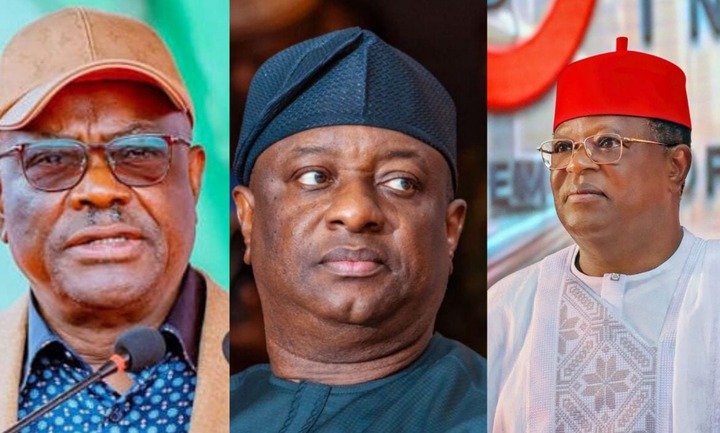
The group also called for scrutiny of three serving ministers responsible for the Federal Capital Territory, Works and Aviation.
InterSociety Identifies 239 INEC Officials for International Monitoring
InterSociety explained that the 239 INEC officials identified in its petition occupy strategic positions in the administration of elections, particularly in technology, voter registration, logistics and procurement.
The proposed list includes the INEC chairman, the National Director of Information and Communication Technology/Voter Registration (ICT/VR), his deputy, 74 heads and deputy heads of ICT/VR departments across the states and the Federal Capital Territory.
Other officials listed include administrative officers and national and state directors responsible for election operations and procurement.
The organisation argued that the positions occupied by these officials make their responsibilities particularly important to the transparency and credibility of the 2027 elections.
482 Judicial Officers Also Face Proposed International Scrutiny
The petition also identified 482 judicial officers whose activities and decisions relating to the 2027 general elections should, according to InterSociety, be subjected to international scrutiny.
The list comprises the Chief Justice of Nigeria, 20 other Supreme Court justices, the President of the Court of Appeal and more than 80 other justices of the appellate court.
The remaining 375 judicial officers reportedly include 138 returning members and 237 newly nominated officers inaugurated by the President of the Court of Appeal on November 9, 2026, to handle election petitions arising from the forthcoming general elections.
InterSociety said the proposed monitoring would cover proceedings and decisions of the 2027 Presidential Election Petition Tribunal, the Presidential Election Appellate Tribunal and the Supreme Court.
The organisation maintained that international scrutiny of election-related judicial proceedings would help promote transparency and accountability in the resolution of electoral disputes.
Group Raises Concerns Over 2023 Election Experience
Explaining the reasons behind its petition, InterSociety said the proposed watchlist was intended to prevent what it described as a repeat of the circumstances surrounding Nigeria’s widely condemned 2023 alleged electoral fraud and its alleged judicial endorsement.
The organisation stated that the officials were being considered for international monitoring based on what it described as circumstantial suspicion of possible involvement in undemocratic conduct before, during and after Election Day.
It, however, maintained that the reasons for monitoring electoral and judicial officials differed from those concerning political officeholders.
According to the group, its concerns about election administrators and judicial officers centred on possible manipulation of the electoral process, irregularities and the handling of post-election disputes.
InterSociety stressed that the neutrality and integrity of INEC officials and judicial authorities would play a crucial role in determining whether Nigerians could freely elect their preferred leaders in 2027.
The organisation added that protecting the democratic rights of voters should not be left to political parties and candidates alone, insisting that election administrators, judicial institutions and relevant authorities must also be held accountable.
The petition is part of the group’s broader efforts to attract international attention to Nigeria’s electoral process ahead of the January 16, 2027 presidential election and other contests scheduled for the general elections.