
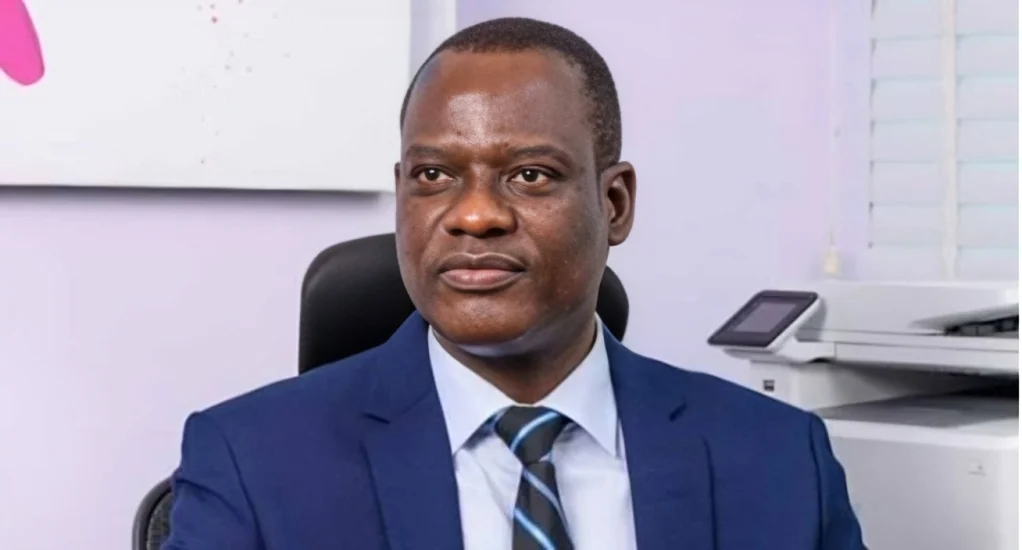
The Federal Government has unveiled 65 bankable investment projects valued at approximately $78.5 billion to Polish institutional and industrial investors, in a major effort to attract foreign capital and create an estimated 366,000 jobs across Nigeria.
The Minister of Finance and Coordinating Minister of the Economy, Taiwo Oyedele, disclosed this while speaking at the Second Polish-Nigerian Economic Forum in Lagos.
Oyedele urged Poland to move beyond diplomatic relations and strengthen direct economic cooperation through investments in infrastructure, manufacturing, energy and other productive sectors.
According to a statement issued by Efe Ovuakporie, Head of the Information and Public Relations Unit of the Ministry of Finance, the 65 projects were carefully selected through the government’s deal room facility, Projects Nigeria.
The minister explained that the projects are backed by completed feasibility studies and structured to attract private-sector investment into critical areas of the Nigerian economy.
He said Nigeria was shifting its foreign economic strategy away from exporting mainly raw materials towards building factories, developing infrastructure and increasing domestic production through strategic partnerships.
Oyedele also highlighted the planned groundbreaking for the modernisation of the Lagos Port Complex at Apapa and Tin Can Island, describing the project, which has Polish financing support, as evidence that bilateral agreements can translate into tangible economic development.
Nigeria and Poland Seek to Expand Bilateral Trade
The Finance Minister disclosed that Poland exported approximately $169 million worth of goods to Nigeria in 2025, while Nigeria’s exports to Poland stood at about $565 million.
However, crude oil accounted for more than 90 per cent of Nigeria’s exports to the European country.
With combined trade valued at approximately $734 million, Oyedele described the economic relationship as significantly below its potential, considering Nigeria’s population and Poland’s growing economic strength.
He called for the expansion of bilateral trade beyond crude oil and unprocessed agricultural commodities.
According to him, both countries could explore greater commercial opportunities in processed agricultural products, fertilisers, sesame, industrial machinery, technology and services.
He further encouraged Nigerian businesses to focus on exporting finished products while taking advantage of Polish engineering expertise, industrial equipment and technology to strengthen local manufacturing capacity.
FG Highlights Poland’s Economic Growth
Welcoming Poland’s Minister of Finance, Andrzej Domański, to Lagos, Oyedele said his presence demonstrated Poland’s growing recognition of Nigeria as an important commercial partner in Africa.
He noted that both finance ministries have important roles to play in aligning fiscal policies, investment incentives and development financing towards job creation and improved household incomes.
The minister also recalled that diplomatic and commercial relations between Nigeria and Poland date back to a 1962 trade agreement, signed two years after Nigeria gained independence.
Despite the elevation of bilateral relations to a Strategic Partnership in 2013 and the establishment of a Polish Foreign Trade Office in Lagos in 2018, he said trade between the two countries remained relatively limited.
Oyedele concluded by referencing Poland’s economic transformation over the past three decades, noting that its economy grew from approximately $67 billion in 1989 to more than $1 trillion in 2025.
He described Poland’s economic progress as an important lesson for Nigeria as the Federal Government pursues structural reforms, industrial expansion and stronger private-sector investment.
The proposed $78.5 billion investment portfolio is expected to provide opportunities for deeper economic cooperation between both countries while supporting Nigeria’s ambition to expand industrial production, attract foreign investment and generate hundreds of thousands of jobs.