
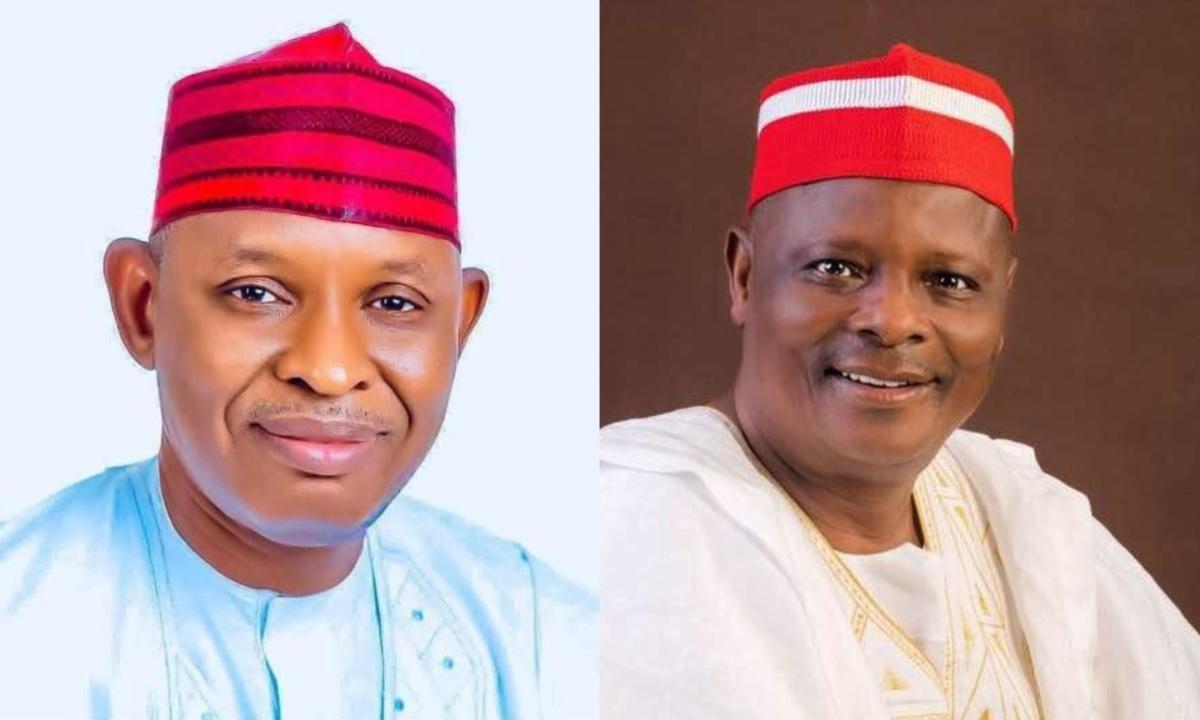
Former Kano State Governor and chieftain of the National Democratic Congress (NDC), Rabiu Musa Kwankwaso, has accused his successor, Governor Abba Kabir Yusuf, of allegedly using anti-corruption institutions, particularly the Economic and Financial Crimes Commission (EFCC), to damage his reputation for political reasons ahead of the 2027 general elections.
Kwankwaso made the allegation in a statement published on his official X account on Friday, claiming that the Kano State governor was determined to drag him and members of his family into public controversy to destroy the reputation he had built over nearly five decades.
The former governor recalled that Yusuf had worked closely with him for 43 years, serving as his Personal Assistant, Principal Private Secretary and Commissioner before becoming the candidate of their political movement in the 2019 and 2023 governorship elections.
He said he played a significant role in Yusuf’s emergence as governor in 2023 but regretted that the trust he had placed in his former political associate had allegedly been abused.
According to Kwankwaso, their longstanding relationship gave Yusuf access to sensitive information about his personal values and commitment to integrity.
He alleged that Yusuf personally approached the EFCC several months ago with a formal request to investigate him but turned to another organisation after allegedly failing to persuade the commission to act against him.
Kwankwaso specifically accused the governor of using the Society for Anti-Corruption and Good Governance Initiative (SACGGI) to mount pressure on the anti-graft agency through protests and media activities.
The allegations followed a protest staged by SACGGI at the EFCC headquarters in Abuja two days earlier, during which the organisation demanded an investigation into Kwankwaso over alleged ownership of several high-value properties in Abuja, Lagos, Kano and Nasarawa states.
The group also submitted a petition requesting an investigation into the sources of funds used to acquire the properties, alongside the former governor’s bank accounts, tax records and asset declarations.
Speaking during the protest, SACGGI spokesperson, Muhammad Abdullahi, said the organisation wanted the EFCC to establish the actual ownership of the properties, determine their sources of funding and ascertain whether they were properly declared in line with public service regulations.
The organisation maintained that its petition was not politically motivated, insisting that public officials should be accountable for their wealth.
Responding to the protesters, Michael Nzekwe, Chief of Staff to the EFCC Chairman, assured them that the commission would examine the petition professionally, stressing that the agency remained apolitical.
However, Kwankwaso questioned the credibility of SACGGI, alleging that the organisation was not registered with the Corporate Affairs Commission (CAC) and had no verifiable digital presence or formal relationship with the EFCC or the Independent Corrupt Practices and Other Related Offences Commission (ICPC).
He described the protest as a deliberate attempt to pressure the EFCC into taking action against him.
The former governor also accused Yusuf and some members of his cabinet of using media platforms to promote allegations against him through what he described as selective leaks of information.
Kwankwaso alleged that the campaign was designed to undermine his public image and weaken his political camp ahead of the 2027 general elections.
He warned that the growing political disagreement could increase tension in Kano State and threaten the peace and security of the state.
The former governor further alleged that the political pressure extended to other members of his camp, particularly Aminu Abdussalam, the Kano State governorship candidate.
According to him, Yusuf was attempting to influence institutions, including the Independent National Electoral Commission (INEC) and the judiciary, to prevent Abdussalam’s name from appearing on the ballot for the 2027 governorship election.
Kwankwaso claimed that Abdussalam was currently defending his governorship ticket before INEC and the courts, alleging that the objective was to stop him from contesting and pave the way for Yusuf to emerge as the sole candidate.
Despite his allegations, Kwankwaso commended the EFCC for what he described as its professional handling of previous invitations extended to him during his years in public service.
He maintained that he had no record of corruption despite holding several public positions throughout his career.
Kwankwaso listed his previous positions to include two terms as governor of Kano State, 17 years in the civil service, Deputy Speaker of the House of Representatives during the aborted Third Republic, Minister of Defence, Special Adviser to the President on Darfur and Senator representing the Northwest in the 8th National Assembly.
He also recalled serving as an elected delegate to the 1994–1995 Constitutional Conference and as a representative of the Northwest on the Niger Delta Development Commission.
The former governor concluded by cautioning serving and younger politicians against actions that could expose them to public scrutiny, reminding them that political power was temporary.
He stated: “Public office is transient; those who live in glass houses should be careful about throwing stones.”
The allegations have brought renewed attention to the political disagreement between Kwankwaso and Governor Abba Yusuf, particularly as political activities and alignments ahead of the 2027 general elections continue to attract attention.
Note: The allegations against Governor Yusuf and the claims concerning SACGGI remain attributed to Kwankwaso. The EFCC’s stated position is that it will examine the petition professionally.