
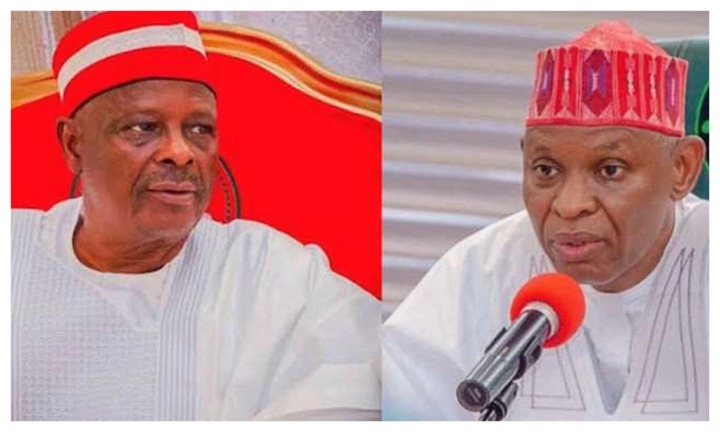
Former presidential spokesperson and All Progressives Congress (APC) chieftain, Bashir Ahmad, has warned Kano State Governor, Abba Kabir Yusuf, and his estranged political godfather, Rabiu Musa Kwankwaso, against allowing their political disagreement to undermine the interests and welfare of Kano residents.
Ahmad made the appeal in a statement shared on his official X handle on Friday, following allegations by Kwankwaso that Governor Yusuf was using government institutions to target him.
The APC chieftain stressed that the ongoing disagreement between the governor and his former political associates should not be allowed to distract from the responsibility of delivering good governance to the people of Kano State.
According to Ahmad, Governor Yusuf has a constitutional responsibility to govern the state and implement policies that benefit its residents. He also maintained that opposition figures have the democratic right to criticise government policies and seek the mandate of the people through legitimate political processes.
Ahmad further argued that political relationships should no longer determine who is questioned or exempted from accountability, insisting that public officials and political leaders must be subject to scrutiny regardless of their affiliations.
He wrote: “The political disagreement between Governor Abba Kabir Yusuf and his former political associates should not be allowed to overshadow the interests of Kano State.”
The former presidential spokesperson also noted that the era when political relationships determined who should be questioned and who should be exempted from scrutiny ought to be over.
His comments come amid growing political tension between Governor Abba Kabir Yusuf and Kwankwaso, who was previously regarded as his political mentor and played a significant role in his emergence as governor.
The disagreement has attracted public attention, with political observers watching how the dispute could affect governance, political alignments and the future of Kano State politics.
Ahmad’s intervention highlights the need for political leaders to prioritise public welfare, democratic accountability and the development of Kano State above personal and political disagreements.