
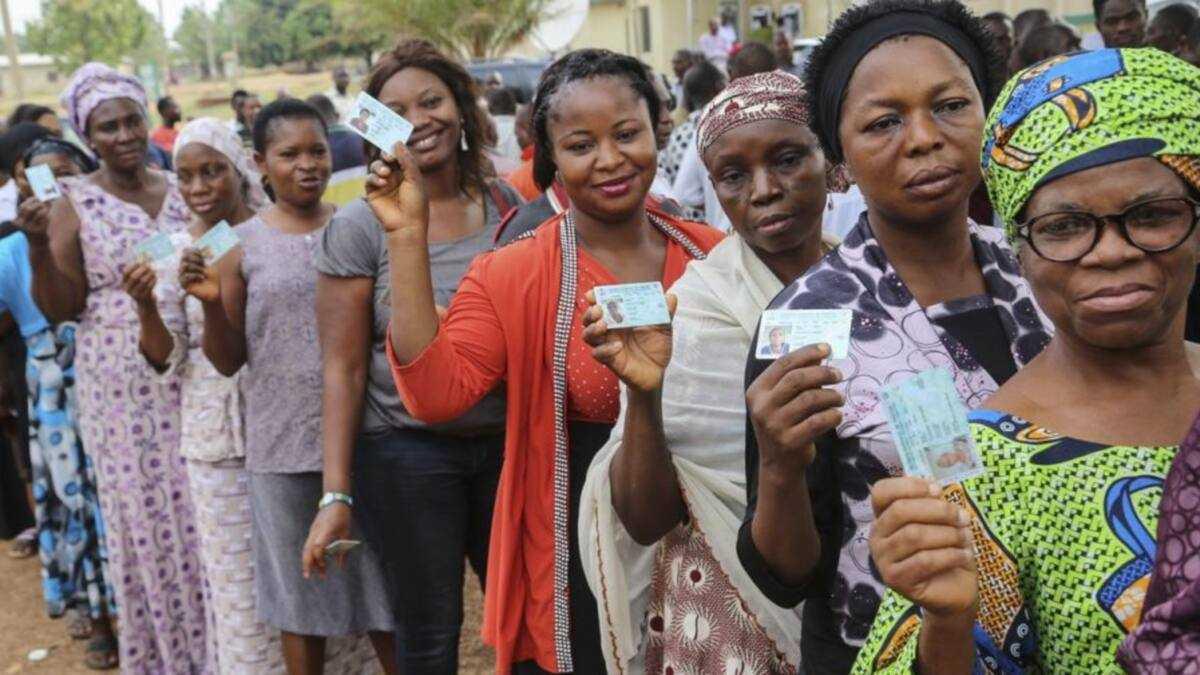
Nigeria’s electoral credibility is facing renewed scrutiny as concerns over the integrity of the Independent National Electoral Commission’s (INEC) Voters’ Register, suspected AI-generated entries and the distribution of Permanent Voter Cards (PVCs) raise questions about the reliability of the country’s electoral system ahead of the 2027 general elections.
The credibility of an election is determined long before voting begins. At the centre of this process is the Voters’ Register, the official database that establishes who is eligible to participate in the democratic process.
An unreliable register threatens the foundation of electoral integrity because it can create opportunities for duplicate registrations, fictitious identities, wrongful omissions and disputes over the legitimacy of election results.
For Nigeria, where public confidence in electoral institutions remains a significant concern, ensuring an accurate, transparent and verifiable Voters’ Register is an essential responsibility of INEC.
Nigeria’s Voters’ Register: From Manual Registration to Biometric Technology
Nigeria has moved considerably from the largely manual voter registration arrangements of the 1950s to modern biometric registration systems, electronic databases and the deployment of the Bimodal Voter Accreditation System (BVAS).
The 1959 general election, conducted under the Electoral Commission of Nigeria (ECN), had approximately nine million registered voters. Subsequent elections in 1964/65, 1979, 1983 and 1993 experienced different administrative and political challenges associated with voter registration.
The Fourth Republic introduced more sophisticated electoral technologies, including biometric identification, Permanent Voter Cards and mechanisms for detecting duplicate registrations.
However, technological advancement has not automatically translated into electoral credibility.
Nigeria recorded approximately 73.5 million registered voters in 2011, 67.4 million in 2015 and 84 million in 2019. These fluctuations do not, by themselves, establish electoral manipulation, as legitimate deletions, corrections and new registrations can affect the figures.
The more important question is whether the records accurately represent living, eligible Nigerian citizens.
A larger register is not necessarily a more credible register. Likewise, biometric technology cannot guarantee integrity without effective institutional oversight.
INEC and the Growing Concerns Over Electoral Credibility
Public confidence is one of the most important assets of an electoral commission.
Although INEC enjoys constitutional independence, its operational credibility depends on transparency, competence, impartiality and accountability.
When confidence in the commission declines, virtually every administrative decision becomes vulnerable to suspicion, including voter registration, PVC distribution, voter accreditation and results management.
This creates a distinction between administrative validity and democratic legitimacy.
Administrative validity concerns whether prescribed procedures have been followed, while democratic legitimacy concerns whether citizens believe those procedures have produced a trustworthy electoral outcome.
The European Union Election Observation Mission’s final report on Nigeria’s 2023 general elections identified shortcomings in electoral administration that undermined public confidence.
Among its recommendations was an independent external audit of the Voters’ Register, including physical data checks and an assessment of biometric data quality.
The recommendation highlights the importance of independent verification in strengthening confidence in Nigeria’s electoral database.
What the Electoral Act Says About Public Inspection of the Voters’ Register
Section 19 of the Electoral Act provides for the public display and scrutiny of the Voters’ Register.
Under the provision, INEC is required to designate a seven-day period, not later than 90 days before a general election, for displaying the register at Registration Areas and publishing it on its official website or another designated website.
The law also provides an opportunity for claims and objections concerning names improperly included in or omitted from the register.
Furthermore, failure by an INEC official to display or publish the register as required constitutes an offence under Section 19(5).
Public inspection is important because it allows citizens to identify incorrect information, questionable entries, omissions and wrongful voter transfers before election day.
Political parties, civil society organisations and election observers can also scrutinise the database and raise legitimate concerns.
Transparency in this process is not an administrative favour. It is a democratic safeguard.
INEC must therefore ensure that the register is accessible, adequately publicised and open to meaningful public scrutiny.
AI-Generated Images and Suspected Fake Voter Records Raise Fresh Questions
The emergence of artificial intelligence has introduced another dimension to concerns about the integrity of Nigeria’s Voters’ Register.
In October 2026, concerns emerged over suspected AI-generated photographs, duplicate records and questionable entries in Nigeria’s preliminary Voters’ Register.
INEC acknowledged investigating the irregularities, while its Director of Information and Communication Technology, Lawrence Bayode, attributed some questionable records to alleged misconduct by registration officers with access to the platform.
The commission’s handling of the matter has also attracted criticism, particularly over the need for greater transparency regarding officials allegedly involved.
AI technology can generate convincing synthetic facial images and identity-related material, potentially creating new challenges for electoral databases that rely on biometric information.
However, a suspicious photograph does not automatically establish that a fictitious individual has been registered.
Each questionable identity must be independently investigated and verified.
INEC should explain how the affected records entered its database, how many questionable entries have been identified, whether verified irregularities have been removed and what safeguards have been introduced to prevent future occurrences.
The integrity of a national electoral database cannot depend solely on the assumption that every official with access to the system will act honestly.
It must incorporate safeguards capable of detecting and preventing misconduct.
PVC Distribution: Why Millions of Registered Voters Must Not Be Left Behind
An accurate Voters’ Register is only one part of electoral participation. Eligible citizens must also be able to obtain their Permanent Voter Cards and exercise their voting rights.
INEC’s figures for the 2023 general election showed that, as of February 5, 2023, 87,209,007 out of 93,469,008 registered voters had collected their PVCs.
This meant that more than six million registered voters had not collected their cards at the time.
The figures raise important questions about accessibility, voter notification, relocation procedures and the efficiency of PVC collection centres.
Although uncollected PVCs do not automatically indicate electoral manipulation, they highlight the gap between voter registration and actual participation.
INEC must improve collection arrangements, strengthen public awareness and make the process more accessible to registered voters.
The objective should be to ensure that every eligible citizen has a reasonable opportunity to collect their PVC before an election.
How an Unreliable Voters’ Register Can Undermine Elections
The consequences of an unreliable Voters’ Register extend beyond administrative errors.
A defective database can create opportunities for electoral disputes, litigation and allegations of manipulation.
Candidates, political parties and voters may challenge questionable entries, omissions, accreditation figures and other irregularities linked to the register.
Although an unreliable register does not automatically invalidate an election, it introduces uncertainty into subsequent stages of the electoral process.
Nigeria’s biometric registration system was designed partly to prevent duplicate identities and other forms of electoral abuse.
However, its effectiveness depends on accurate data, secure database management, independent verification and the integrity of officials responsible for operating the system.
INEC must therefore address both external attempts at manipulation and potential insider misconduct.
What INEC Must Do to Restore Confidence in the Voters’ Register
Restoring public confidence requires more than assurances from electoral officials. It requires measurable reforms and demonstrable accountability.
INEC should prioritise the following measures:
1. Conduct an independent audit: An external audit should examine duplicate identities, biometric inconsistencies, deceased registrants, underage entries and suspicious photographs.
2. Enforce Section 19 of the Electoral Act: The commission must ensure that the Voters’ Register is displayed and published within the legally prescribed period.
3. Improve public access: Citizens should have meaningful access to searchable, appropriately protected voter information, including polling-unit-level data.
4. Strengthen database security: INEC should introduce stricter access controls, audit trails and monitoring systems to prevent unauthorised alterations.
5. Remove verified irregularities: Confirmed duplicate, deceased and otherwise ineligible records should be addressed through transparent procedures.
6. Improve PVC collection: Collection centres, notification systems and voter information campaigns should be strengthened to ensure that eligible citizens can obtain their cards.
7. Hold officials accountable: Personnel found to have deliberately manipulated voter information should face appropriate disciplinary and legal consequences.
8. Publish periodic updates: INEC should provide clear explanations of additions, deletions, corrections and other changes to the national register.
These measures would help transform transparency from a public-relations commitment into an operational principle.
Conclusion: Nigeria’s Electoral Credibility Begins Before Election Day
Nigeria’s electoral credibility cannot be separated from the integrity of its Voters’ Register.
The transition from manual registration in the 1950s to sophisticated biometric systems should have produced an electoral environment in which the identity and eligibility of voters are beyond reasonable suspicion.
That concerns about the reliability of the database remain a subject of national controversy is a sobering indictment of the country’s electoral administration.
Ultimately, the Voters’ Register belongs to the Nigerian people whose democratic rights it records.
Nigeria does not necessarily need a bigger register. It needs a more accurate, transparent, independently verifiable and credible one.
INEC must ensure that every eligible voter is properly registered, that questionable entries are investigated, and that every registered citizen has a reasonable opportunity to collect their PVC.
A free, fair and credible election does not begin on election morning. It begins much earlier, with the painstaking process of establishing who is entitled to vote.
The integrity of the ballot is inseparable from the integrity of the register. Where the foundation is uncertain, the legitimacy of the electoral outcome will always remain vulnerable.