
Governor Ademola Adeleke has done what many doubted he could do just ten days ago, when the EFCC froze his state’s accounts and his opponents smelled blood.
He won a second term, and by a margin that leaves little room for the kind of photo-finish dispute that often follows closely fought elections.
INEC declared Adeleke the winner on Sunday with 511,067 votes, ahead of APC’s Bola Oyebamiji on 444,815 — a gap of 66,252 votes. Najeem Salaam of the ADC trailed a distant third with 17,180 votes. A total of 985,079 votes were declared valid, while 20,721 were rejected.
But beyond the headline result, the election produced winners and losers whose fortunes extend beyond the governor’s victory or the APC’s defeat.
Some political heavyweights saw their influence strengthened; others watched months of endorsements and political mobilisation produce little at the ballot box.
And in several cases, the results from their own polling units offered another measure of how their preferred candidates performed at home.
Who won
Adeleke
Adeleke is the obvious winner. He fought the election with his back against the wall, state funds frozen before the polls, an opposition that smelled weakness, and a final week dominated by allegations of violence traced to both camps.
He nevertheless emerged with a clear margin.
Whatever else is said about his first term, Osun voters gave him another four years.
The result also gives Adeleke a stronger political platform within the state as he enters his second term, particularly after an election in which opposition parties sought to combine forces, directly or indirectly, to deny him victory.
Adewale Egbedun
The Speaker of the Osun State House of Assembly also emerged from the election with his political position strengthened.
Egbedun spent the closing days of the campaign accusing APC figures Francis Eniade and Senator Francis Fadahunsi of threats and violence against Accord supporters in Odo Otin, while facing his own allegation of attacking Eniade in Okuku.
The allegations remained part of the election’s turbulent final days, but they did not prevent Adeleke’s party from securing victory.
For Egbedun, the outcome means the election did not produce the kind of political backlash that could have weakened his position within the administration or the state legislature.
INEC
INEC and the Returning Officer, Prof. Joshua Ogunwole, will also get a quieter win. The commission had to contend with 58 malfunctioning BVAS machines, a polling unit where voting did not begin until 12:30pm and 38 security incidents observed by the Hub on election day.
Yet the commission completed the collation and declared the result on Sunday without the process descending into the kind of breakdown that could have overshadowed the outcome.
For an electoral commission preparing for the 2027 general elections, the ability to complete the exercise despite those incidents will form part of the post-election assessment.
Who lost
Bola Oyebamiji
Oyebamiji’s defeat is perhaps the clearest. He ran a campaign built around APC’s effort to wrest Osun from Adeleke, backed by endorsements from prominent former political office holders and members of a PDP faction opposed to the governor.
But he finished 66,252 votes behind Adeleke.
For a candidate who had hoped to consolidate the opposition vote, the result shows that the coalition assembled around his candidacy was not enough to overcome Adeleke’s statewide support.
APC
The bigger political loser may be the APC itself. The party spent months positioning Osun as an important test of its ability to expand its influence ahead of 2027. Losing the state therefore goes beyond the governorship.
Ajibola Basiru, the party’s National Secretary, had already attached wider political consequences to the outcome when he told party members in May: “Let me state clearly: if we fail to secure victory for Oyebamiji on Aug. 15, Senate and House of Representatives tickets on the APC platform will be meaningless.”
By Basiru’s own formulation, the result therefore raises questions about the APC’s prospects in the state’s National Assembly contests in 2027.
Francis Eniade and Fadahunsi
Francis Eniade and Senator Fadahunsi also finished the election under considerable political scrutiny.
Eniade’s final week was dominated by allegations of assault, a threat video and the controversy surrounding the release of suspects rather than the APC’s campaign message.
Fadahunsi, meanwhile, faced two separate controversies. Days before the election, a viral video showed him at the Owa Obokun’s palace in Ilesa making remarks that were interpreted as a call to violence against Accord members. He was subsequently invited by the police and later released on bail.
Fadahunsi denied the interpretation of the video, saying it had been doctored and that he meant “kill Accord with votes.” On election day, another video emerged from his polling unit in Ilase-Ijesa showing him allegedly instructing men to monitor voters and warning against voting for opponents.
The incidents put the APC campaign on the defensive during a period when the party needed to concentrate on converting its anti-Adeleke campaign into votes.
Najeem Salaam and the ADC
The ADC’s third-place finish is another significant story from the election. Salaam polled 17,180 votes statewide and did not win a single local government area. That performance fell considerably short of the expectations generated by the party’s campaign and the political figures it assembled behind the candidate.
Salaam also raised concerns on election day over the alleged denial of access to ADC agents in several local government areas, while violence was reported at his polling unit in Ejigbo, where security operatives reportedly moved him away from the scene.
The party’s inability to convert its political structure and campaign into a stronger statewide vote will likely become part of the internal debate over its performance.
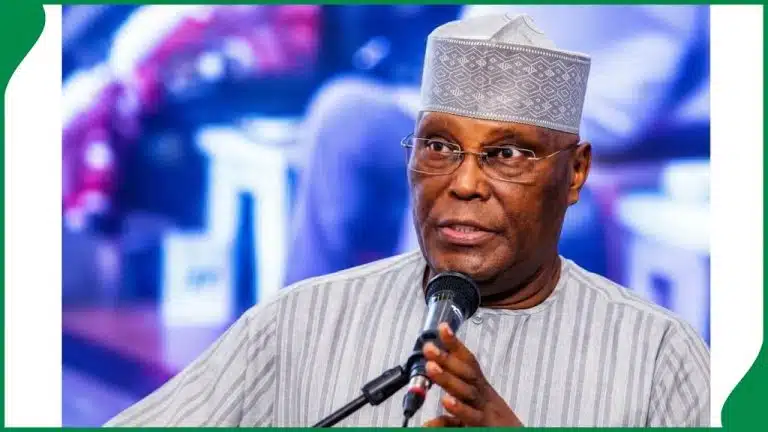
Atiku Abubakar
The result also carries implications for former Vice President Atiku Abubakar. Atiku personally campaigned for Salaam in Osogbo, putting his political weight behind the ADC candidate. But Salaam finished third with 17,180 votes, less than two per cent of the valid votes cast.
The Osun election does not determine the outcome of the 2027 presidential election, and it would be excessive to treat the result as a referendum on Atiku’s national political prospects.
That will matter as the opposition continues to position itself for 2027.
The Oyinlola-led PDP faction
The PDP faction led by former Governor Olagunsoye Oyinlola also has little to celebrate. The group, which included figures such as Fatai Akinbade and Tajudeen Oladipo, publicly backed Oyebamiji after accusing Adeleke’s administration of lacking inclusiveness. They made the political calculation that the APC candidate offered a better route than returning to Adeleke.
Oyebamiji, however, lost. The result leaves the faction having openly opposed the sitting governor without securing the political outcome it sought.
The backyard test
The election results also offer a snapshot of how some of Osun’s political heavyweights performed in their own polling units. The results from the units where they voted provide a local picture of how their preferred candidates fared at home, alongside the wider statewide outcome.
Akande won the booth, lost the council
APC’s founding interim national chairman and a former Osun governor delivered his own unit, PU 12, Ward 4, Ila-Orangun. Oyebamiji polled 181 votes to Adeleke’s 121, a 60-vote APC win. But the personal victory didn’t travel. Ila Local Government as a whole, Akande’s home turf, went to Accord with 16,211 votes to APC’s 12,934. The party’s most senior elder statesman could deliver his booth and still lose his own council.
Oyinlola and Omisore lose at home
Former Governor Olagunsoye Oyinlola, who led the PDP faction that endorsed Oyebamiji, lost his own polling unit in Okuku, Odo-Otin.
Accord polled 125 votes there against APC’s 85. Former deputy governor and ex-APC National Secretary Iyiola Omisore, who also endorsed Oyebamiji, similarly lost his polling unit in Ife East.
Endorsement failed at home
Rauf Aregbesola, ADC’s National Secretary, was one of the most prominent figures behind Salaam’s campaign. He brought Atiku Abubakar to Osogbo to campaign for Salaam and publicly expressed confidence in the ADC candidate.
But at Aregbesola’s own polling unit in Ilesa East, Oyebamiji polled 256 votes, Adeleke’s Accord 43, while Salaam received just 13.
Salaam finishes third in his own LG
The result was also unfavourable to Salaam in his own Ejigbo Local Government. Accord won the LGA with 18,458 votes, followed by APC with 16,195. Salaam’s ADC came third with 5,053.
Basiru won at home, lost statewide
Ajibola Basiru provides the opposite example. His polling unit in Osogbo gave Oyebamiji 177 votes against Adeleke’s 60. Basiru therefore won his own polling unit, even though the candidate and party he was campaigning for lost the state.