
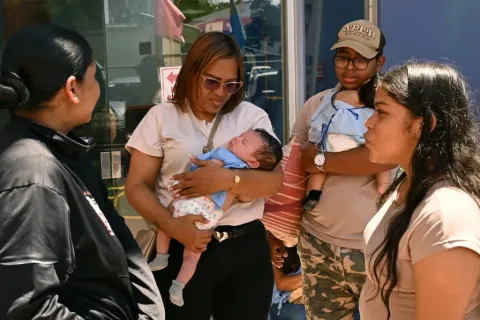
UNICEF estimates that 38,000 people, including 8,300 children, need humanitarian assistance following the 7.5-magnitude earthquake that struck Panama on October 9, 2026.
In a statement issued on October 12, UNICEF said the earthquake damaged homes, schools, health facilities and critical water and transport infrastructure, disrupting essential services in affected communities.
Assessments are ongoing, with significant impacts confirmed in the provinces of Veraguas, Coclé, Herrera and Los Santos.
UNICEF Representative in Panama, Olga Isaza, said children and families continued to experience fear and distress three days after the earthquake, as aftershocks persisted and access to essential services remained disrupted.
“Three days after the earthquake, children and families continue to experience fear and distress as aftershocks persist, with thousands of children in the hardest-hit communities facing disruptions to essential services, including safe water and education,” Isaza said.
She added that UNICEF was working closely with the Government of Panama and humanitarian partners to support affected children and families in the coming weeks.
Hundreds of Educational Facilities Damaged
The earthquake has significantly disrupted education across Panama, with preliminary government reports indicating that 656 educational facilities sustained damage nationwide.
Classes were suspended on October 12 as authorities continued structural safety inspections to determine whether affected schools could safely resume operations.
The disruption has raised concerns about children’s access to education, particularly in communities where school infrastructure has been damaged and families are struggling to access basic services.
Health services have also been affected, with authorities reporting damage to at least 25 health facilities.
UNICEF Deploys Emergency Tents to Support Health Services
To help maintain essential healthcare services, UNICEF has partnered with Panama’s Ministry of Health to deploy emergency tents at facilities affected by the earthquake.
The agency has made 16 tents available to health authorities, with each tent covering 72 square metres, to support the continuity of health services.
UNICEF said it was continuing to assess additional requirements to ensure children and adolescents could access essential healthcare while damaged facilities were being evaluated or restored.
Safe Water, Sanitation and Child Protection Remain Priorities
UNICEF is assessing access to safe water and sanitation, evaluating damage to schools and identifying urgent education needs.
The agency is also monitoring child protection risks linked to displacement, interruptions to essential services and psychological distress following the earthquake.
Children in affected communities may face increased vulnerabilities when access to education, healthcare, safe water and protective services is disrupted.
UNICEF said its response would focus on ensuring that children remained at the centre of emergency assistance and early recovery efforts.
UNICEF Appeals for $2.5 Million for Emergency Response
UNICEF urgently requires US$2.5 million to provide life-saving assistance and support early recovery for children and families affected by the earthquake.
Working with the Government of Panama and humanitarian partners, the agency has scaled up its emergency response by deploying additional personnel and mobilising critical supplies.
The ongoing operation aims to address immediate humanitarian needs while helping restore essential services for children and families in affected communities.
As damage assessments continue, UNICEF and its partners are working to identify further gaps in healthcare, education, water and sanitation, and child protection.
The agency has stressed the importance of sustained support to help affected children and families recover from the earthquake and regain access to essential services.
Source: UNICEF
Dateline: New York/Panama City, October 12, 2026