
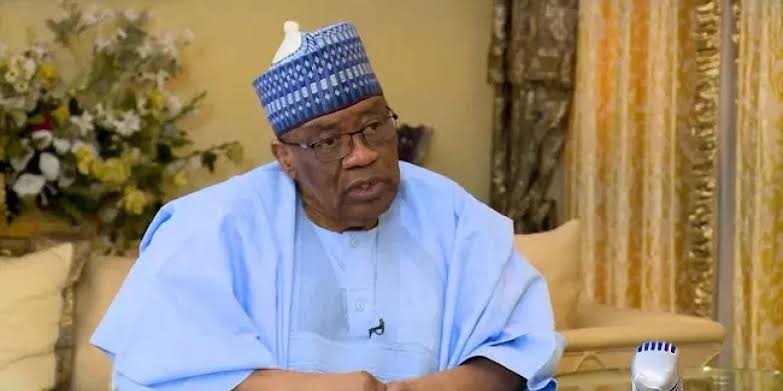
A survivor of the reported deaths of 37 suspected illegal miners in the custody of the Nigeria Security and Civil Defence Corps (NSCDC) in Niger State has alleged that the mining site where the miners worked belonged to former military Head of State, General Ibrahim Badamasi Babangida.
The allegation was made by Malam Babawo Tudun Nasera while recounting the arrest and death of his 17-year-old younger brother, Salim, who was among the miners detained by NSCDC personnel.
Nasera made the claim in a video seen by SaharaReporters, saying the miners were arrested at the mining site and remained in custody for about three days before their deaths were discovered.
According to him, the miners had been instructed to stop working at the site, but they continued because, he alleged, the owner had directed them to carry on with the mining activities.
“They wanted us to stop working at the site,” Nasera said.
When asked why authorities wanted the mining operation halted, he reportedly said the person he identified as the owner had instructed the miners to continue working.
“They wanted the work to stop, even though the owner of the place had said that we should continue working,” he said.
Asked who owned the site, Nasera replied, “It belongs to Babangida.”
He subsequently clarified that he was referring to retired General Ibrahim Badamasi Babangida, popularly known as IBB.
Asked whether Babangida had instructed the miners to continue working, Nasera responded, “Yes, he said we should continue working.”
However, the ownership claim has been disputed. Babangida, through his representative, Dr Danladi Umar Abdulhameed, has denied owning or having any connection with the mining operation, describing the allegation as false, baseless and without foundation.
It has also not been independently established whether Babangida owns the land, holds a mining licence or lease over the site, or had any direct involvement in the mining activities. The allegation remains a claim made by the survivor and is subject to verification.
Survivor Recounts Death of 17-Year-Old Brother
Nasera also recounted the death of his younger brother, Salim, whom he said was 17 years old when he died in custody.
“They killed him. We saw him,” he said.
Asked to identify the deceased, Nasera said: “His name was Salim. He was 17 years old.”
He explained that the miners had gone to the site in search of income to support themselves and their families.
“We went there looking for food. The mining site was where people went to find something to feed their families. It was hard work,” he said.
Nasera alleged that NSCDC personnel subsequently arrived at the site, arrested the miners and took them into custody.
“Then Civil Defence officers came, arrested them and took them away. What were we supposed to do?” he said.
According to him, the detainees remained in NSCDC custody for three days despite attempts by relatives and others to secure their release.
“They kept them in custody for three days. They were all in their custody. We tried to get them released, but they refused and said they would not allow it,” Nasera alleged.
Survivor Questions Circumstances of Miners’ Deaths
Nasera also questioned what happened to the detainees between the time they were fed and the discovery of the deaths.
“Yesterday, they brought food to them, and they ate. Each of them ate until he was satisfied. But from yesterday morning until today, what happened that made us come and find out that someone had died?” he asked.
He further alleged that the detainees were given what he described as some form of medicine or substance and were exposed to intense heat.
When asked what he believed might have caused the deaths, Nasera said, “If it was not medicine, what else could it have been?”
His account remains an allegation, and the precise cause of death has not been established in the survivor’s testimony alone. Authorities have initiated investigations into the deaths, while medical and forensic examinations are expected to help determine what happened.
The NSCDC has described the deceased miners as suspected illegal operators, while survivors have maintained that they were working at the site to earn a living.
The controversy surrounding the deaths has prompted investigations into the circumstances of the miners’ detention and deaths, with authorities expected to establish the cause of death and determine whether any individuals or institutions should be held responsible.