
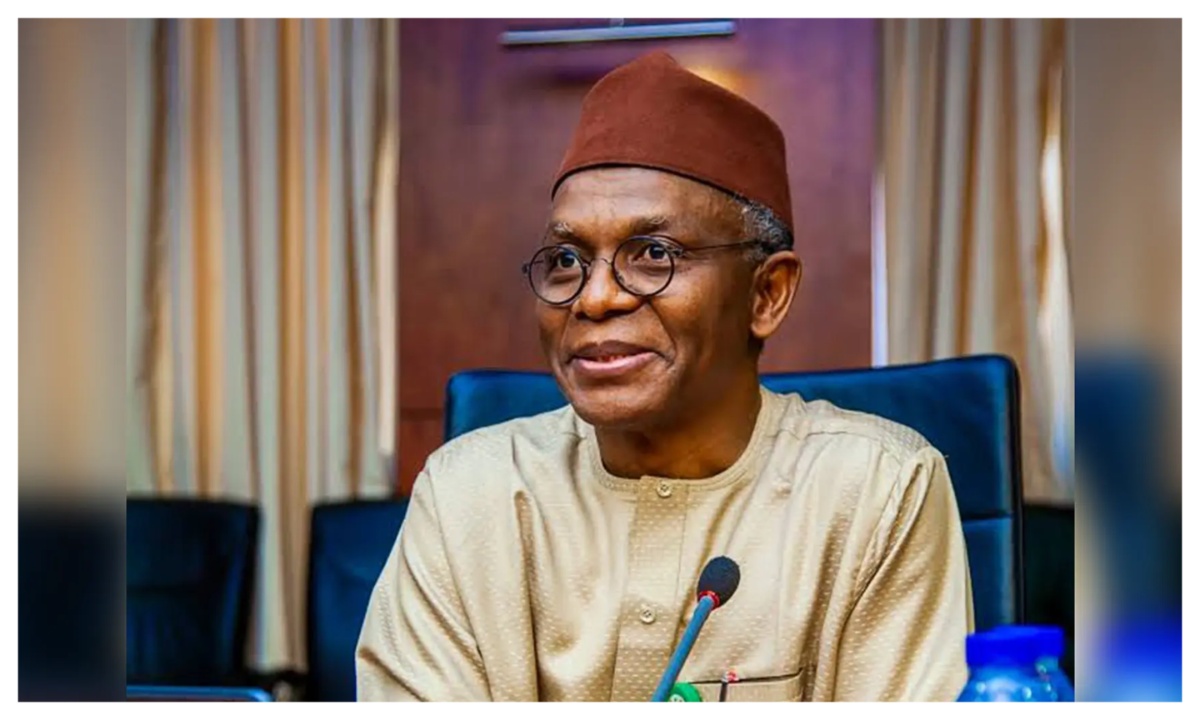
Former Kaduna State Governor, Nasir El-Rufai, has denied intercepting the telephone conversations of the National Security Adviser (NSA), Nuhu Ribadu, insisting that he neither carried out the alleged phone tapping nor instructed anyone to do so.
El-Rufai made the denial on Wednesday while opening his defence before Justice Joyce Abdulmalik of the Federal High Court in Abuja, where he is standing trial over the alleged unlawful interception of Ribadu’s telephone communications.
Testifying under examination by his lawyer, Paul Erokoro, SAN, the former governor told the court that he had never owned equipment used for intercepting telephone calls.
He also said he lacked the technical knowledge required to tap telephone conversations and had no access to the NSA’s communication networks or devices.
Addressing his controversial remarks during a February interview on Arise Television, El-Rufai maintained that his statement was political rhetoric rather than an admission that he had intercepted Ribadu’s telephone.
According to him, his use of the word “we” referred to opposition politicians, while his claim about tapping the NSA’s phone was an exaggeration intended to express his displeasure with the government.
“I used ‘we’ to refer to opposition politicians,” he told the court.
El-Rufai further explained that his choice of words was deliberate and intended as a political response.
“When I said ‘tapped’, it was an embellishment intended to make the government feel the pain we are feeling.
“It was rhetorical and exaggerated. My objective was to engage in political retort and linguistic flourish,” he said.
Court Orders El-Rufai to Open Defence in Phone-Tapping Trial
The former governor’s testimony comes after the Federal High Court dismissed his no-case submission on October 26 in the ongoing trial over the alleged unlawful interception of Nuhu Ribadu’s telephone communications.
Justice Joyce Abdulmalik, in her ruling, held that the Department of State Services (DSS) had presented sufficient evidence to require El-Rufai to enter his defence.
The judge consequently ordered the former governor, who is the sole defendant in the charge, to open his defence.
El-Rufai had filed the no-case submission after the DSS concluded its case, having called two witnesses to testify against him.
With the dismissal of the application, the former governor opted to present his defence, during which he denied the allegations and explained the circumstances surrounding his controversial Arise Television interview.
The case centres on allegations that Ribadu’s telephone communications were unlawfully intercepted, allegations which El-Rufai has now denied before the court.