
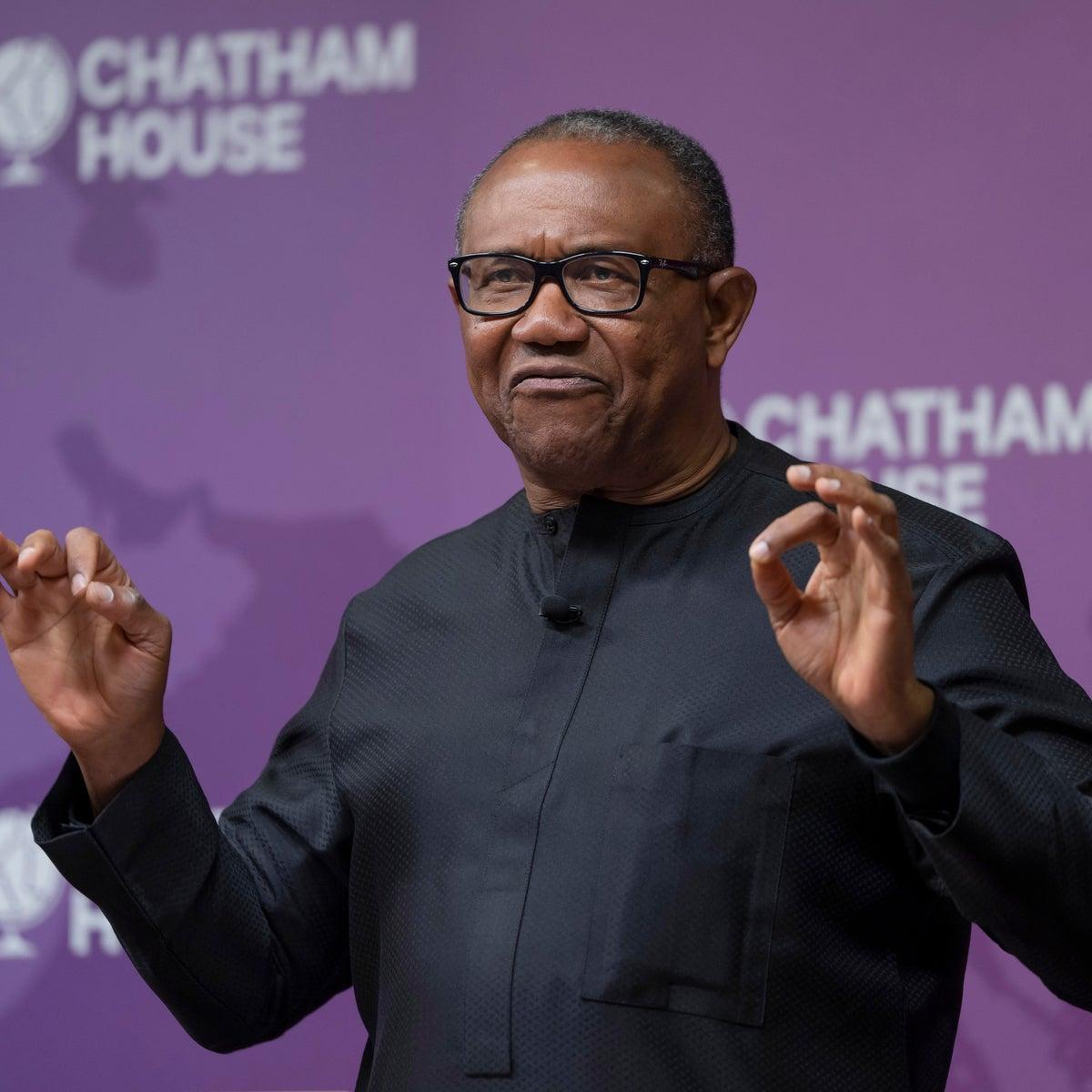
As Nigeria gradually moves towards the 2027 general election, Peter Obi is facing renewed scrutiny over his public statements, record as Anambra State governor, business interests and persistent claims surrounding the 2023 presidential election.
Obi, the former Anambra governor who became a prominent opposition figure after his 2023 presidential campaign, built much of his political appeal around prudent financial management, accountability, competence and a departure from Nigeria’s traditional political establishment.
However, critics argue that some of his recent public appearances and past controversies have raised questions about the consistency of that image.
The central issue is whether Obi can translate his reputation for fiscal discipline and political reform into a broader, evidence-based argument for national leadership ahead of the next presidential election.
From his comments about healthcare in Anambra to questions about infrastructure, economic statistics, corporate interests and his claims about the 2023 election, the former Labour Party presidential candidate continues to attract both passionate support and intense criticism.
Peter Obi’s Anambra Doctors’ Strike Comment Draws Criticism
One of the controversies highlighted by Obi’s critics concerns a prolonged doctors’ strike in Anambra State during his tenure as governor.
At the Nigerian Bar Association’s 2026 conference, Obi was reportedly asked to explain the industrial action, which the supplied account describes as lasting 13 months.
His reported response was that there had been no mass deaths during the period because the doctors were effective.
The comment has attracted criticism because of the distinction between avoiding mass fatalities and maintaining an effective public healthcare system.
Healthcare performance involves more than mortality figures. Access to medical services, delayed treatment, preventable complications, staff welfare and the availability of essential care are also important measures of government performance.
For critics, the reported remark raises questions about how Obi evaluates public service delivery and communicates the consequences of prolonged industrial disputes.
The context of the strike, the exact wording of his response and the official record of its impact should be examined before drawing definitive conclusions about the administration’s handling of the dispute.
Peter Obi’s Response to Questions About Anambra Infrastructure
Obi has also faced criticism over his reported response to a question about schools and infrastructure developed during his administration in Anambra State.
During an interview with Channels Television, he reportedly referred to work at the Igbariam campus of Chukwuemeka Odumegwu Ojukwu University, describing how he cleared and levelled overgrown land.
The remark prompted criticism from political opponents who argued that clearing land should not be presented as equivalent to delivering a fully developed educational institution.
The distinction is significant in evaluating a former governor’s legacy. Infrastructure assessments typically consider completed buildings, facilities, funding, capacity, maintenance and the extent to which projects improved access to education.
Nevertheless, a complete assessment would require examining the specific project, its original condition, the work undertaken during Obi’s administration and any subsequent development.
The controversy illustrates how seemingly casual comments can shape public perceptions of a politician’s record, particularly when the politician has built a reputation around measurable performance.
The 2027 Election and Peter Obi’s Message on Voter Protection
Another issue concerns Obi’s response to a question about protecting votes in Nigeria’s 2027 general election.
According to the supplied account, an audience member identified as James Eze asked Obi during an Afia TV programme what he intended to do to encourage voters to protect their ballots.
Obi reportedly responded by discussing Nigeria’s hunger crisis and figures associated with the Global Hunger Index rather than directly outlining a strategy for safeguarding votes.
The exchange raises an important question about the relationship between economic hardship and electoral participation.
Food insecurity, unemployment and declining purchasing power can influence voter sentiment. However, addressing those problems is different from explaining how voters can protect their choices at the ballot box.
A comprehensive electoral strategy would ordinarily address voter education, election monitoring, transparent result transmission, legal safeguards, the prevention of vote-buying and the role of party agents.
For a politician seeking national office, the challenge is to connect criticism of Nigeria’s economic conditions with practical proposals for electoral integrity and democratic participation.
The exact hunger statistics cited during the programme should also be checked against the relevant Global Hunger Index edition and its methodology, as rankings and estimates can vary by year.
Questions About Peter Obi’s Economic Statistics
Economic data has long featured prominently in Obi’s political messaging. Supporters have presented his emphasis on figures, budgets and public expenditure as evidence of a more analytical approach to governance.
However, critics have questioned the accuracy and context of some of his reported statements about Nigeria’s economic performance.
The supplied account refers to comments made in 2022 in which Obi reportedly placed Nigeria’s total exports at less than $30 billion. It contrasts that statement with figures attributed to the Central Bank of Nigeria and the National Bureau of Statistics, which it says put the relevant 2021 total at approximately $47 billion.
Before publication, the comparison should be checked against the original interview and the precise statistical series being used. Total exports, merchandise exports, oil exports and non-oil exports are different measures and cannot automatically be treated as interchangeable.
The article also cites a separate statement in which Obi reportedly described Nigeria as having the highest infant mortality rate in the world.
Such a claim requires comparison with the relevant United Nations Inter-agency Group for Child Mortality Estimation dataset, including the year, indicator and countries covered.
Infant mortality refers to deaths among children younger than one year per 1,000 live births. It is distinct from the under-five mortality rate, which measures deaths before a child’s fifth birthday.
These distinctions matter because a politician’s argument can be directionally correct about a serious national problem while still presenting an inaccurate statistic or an incorrect international ranking.
For Obi, whose political appeal is closely linked to competence and economic management, numerical accuracy is particularly important.
Peter Obi and the Anambra Brewery Investment Controversy
Obi’s record as Anambra governor has also been the subject of debate over the state’s investment in Intafact Beverages, the brewery in Onitsha subsequently associated with International Breweries.
The supplied account states that Anambra State invested approximately ₦2 billion in the venture in 2012 and identifies a shareholding structure involving SABMiller, the state government and NEXT International.
It further states that NEXT International was founded and managed by Obi before and during parts of his business career, prompting questions about whether the arrangement created a potential conflict of interest.
Former lawmaker Chudi Offodile reportedly challenged the arrangement, arguing that a company associated with Obi’s family should not have benefited from an investment negotiated by a sitting governor using state funds.
Obi’s defence, according to the account, was that he had resigned his directorship before the investment and did not personally benefit from the transaction.
The controversy raises questions about transparency, beneficial ownership and the standards that should apply when public officials participate in investment decisions involving private companies.
However, corporate ownership, the timing of any resignation, the source of the investment decision and the identity of a company’s beneficial owners are matters that require documentary evidence.
The shareholding figures, investment valuation and legal allegations should therefore be verified against Corporate Affairs Commission records, relevant government documents and any available court proceedings.
A fair assessment must distinguish a documented ownership interest from an allegation of wrongdoing and should not treat the existence of a controversy as proof of misconduct.
Peter Obi’s 1996 Government Appointment Letter
Another issue raised by critics concerns a letter dated April 24, 1996, reportedly signed by then Minister of State for Finance Abu Gidado.
According to the supplied account, the letter named Gregory Peter Obi as a co-opted coordinator on a federal task force on ports decongestion.
The account says Obi referred to the letter in July 2025 while responding to allegations about his relationship with the administration of former military ruler Sani Abacha.
Critics argue that the reported appointment appears inconsistent with a broader statement attributed to Obi that he had never held an appointment under a government before becoming Anambra governor in 2006.
The distinction between a temporary assignment, a formal government appointment, a paid public office and a civic or advisory role is important in interpreting the claim.
The original letter, its terms of reference, the duration of the appointment and Obi’s exact explanation should be examined together before reaching a conclusion about the apparent contradiction.
The episode nevertheless demonstrates the importance of precision when public figures describe their professional and political histories.
The Pandora Papers and Questions About Offshore Interests
Obi’s business interests also attracted international attention following the publication of the Pandora Papers investigation.
The International Consortium of Investigative Journalists reported on offshore financial structures associated with prominent individuals around the world, including politically exposed persons.
The supplied account states that the investigation identified an offshore company named Gabriella Investments Limited in the British Virgin Islands, associated with Obi, and raised questions about corporate directorships and asset declarations.
It also refers to concerns about whether interests linked to a public official’s family were adequately declared under Nigeria’s rules governing public officers.
These matters require careful treatment. Offshore incorporation is not, by itself, proof of illegal activity. The relevant questions include beneficial ownership, disclosure obligations, the timing of company directorships, applicable law and whether any breach was established by the competent authorities.
Any assertion about Obi’s knowledge of the company, his declarations or a violation of the Code of Conduct Bureau and Tribunal Act should be supported by the underlying investigative findings and relevant official records.
For voters evaluating political candidates, transparency about assets and business interests remains a legitimate issue of public accountability.
Peter Obi’s Claim About Winning the 2023 Presidential Election
Obi’s insistence that he won the 2023 presidential election remains another defining feature of his political identity.
The Independent National Electoral Commission declared Bola Ahmed Tinubu the winner of the election, while Obi and his legal team challenged the outcome through the judicial process.
The Presidential Election Petition Tribunal dismissed his petition, and the Supreme Court subsequently upheld the outcome of the election through its judgments.
The legal results are distinct from Obi’s continuing political argument that the election did not reflect the will of the electorate.
The supplied account refers to an October 2026 BBC interview in which Obi allegedly acknowledged that he had no evidence to support his claim while maintaining that he had won the election.
Because this is a specific and consequential quotation attributed to a recent interview, the original BBC recording or transcript must be checked before the statement is presented as fact.
If accurately reported, the exchange would raise questions about the difference between a politician’s personal conviction about an election and the evidence required to substantiate a legal claim.
Electoral disputes are resolved through established legal procedures and evidence. Political supporters may continue to disagree with the outcome, but allegations of electoral malpractice must be evaluated against verifiable records.
For Obi, the challenge is to explain how his position on the 2023 election fits into a forward-looking agenda for electoral reform and democratic accountability in 2027.
Can Peter Obi Rebuild His Political Message Before 2027?
The controversies surrounding Obi point to a wider challenge for opposition politics in Nigeria: the need to combine compelling criticism of the government with clear, practical and verifiable policy proposals.
Obi retains a political profile built around public spending, economic reform, accountability and dissatisfaction with the traditional political establishment. Those themes continue to form part of the debate over Nigeria’s future leadership.
However, the credibility of a political message depends not only on identifying problems but also on using reliable data, addressing difficult questions directly and explaining how proposed policies would work in practice.
Questions about Anambra’s public services, economic statistics, business interests and the 2023 election will remain relevant to assessments of Obi’s record. Their significance depends on the quality of the evidence and the accuracy with which each controversy is described.
As the 2027 election approaches, Obi’s task is to demonstrate that his political platform can withstand detailed scrutiny while offering solutions to the country’s economic, institutional and social challenges.
His opponents will continue to examine his statements and record. His supporters, meanwhile, will look for evidence that his message remains a credible alternative to the established political order.
Ultimately, the debate about Peter Obi will be decided not by political slogans alone, but by the evidence surrounding his record, the substance of his proposals and the confidence voters place in his ability to lead Nigeria.