
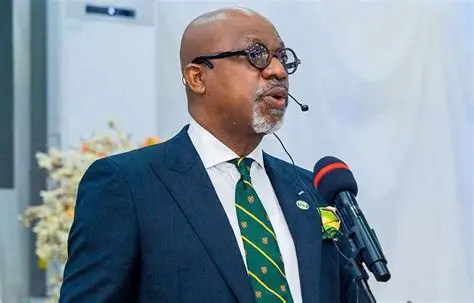
The Chairman of the Southern Governors’ Forum and Ogun State Governor, Dapo Abiodun, has said Nigeria needs an additional 554,353 personnel to adequately staff a proposed state police system, calling for a sustainable funding framework to support the initiative across the country.
Abiodun made the disclosure on Thursday while delivering the keynote address at a colloquium held in honour of the late former Ondo State Governor, Oluwarotimi Akeredolu, to mark his posthumous 70th birthday.
The event took place at the International Conference Centre, University of Ibadan, Oyo State, under the theme, “Fundamentals and Governance of State Policing: Towards a New Architecture for National Security in Nigeria.”
The governor said the debate over state police had moved beyond advocacy, stressing that the priority should now be establishing a system that is adequately funded, professionally managed and accountable to the public.
According to Abiodun, empirical data from the Nigeria Governors’ Forum, based on the United Nations ratio of one police officer to 414 citizens, indicated that Nigeria would require 554,353 additional state police personnel.
He said the proposed recruitment could be spread across three years, translating to approximately 184,784 recruits annually.
“The debate is no longer whether Nigeria needs state police, but how swiftly and sustainably we establish it,” Abiodun said.
He argued that Nigeria could no longer rely on a security structure in which policing responsibilities were largely centralised at the federal level, insisting that local knowledge was essential to effective crime prevention and community protection.
According to him, state police would enable officers to understand the languages, terrain and security challenges of the communities they serve.
Abiodun Calls for State Police Funding Framework
The Ogun governor warned that disparities in the revenue-generating capacity of Nigerian states could undermine the proposed state police system if adequate funding arrangements were not established.
Citing figures on internally generated revenue, Abiodun said Lagos, Rivers, the Federal Capital Territory, Ogun and Enugu accounted for 61.6 per cent of internally generated revenue.
He added that 76 per cent of states generated below the national average of N13,600 per capita, while half earned less than N6,334 per capita.
Abiodun said these differences made it necessary for the Federal Government and state governments to establish a financing mechanism that would guarantee minimum policing capacity across the federation.
He warned that insecurity in states with limited revenue could have consequences beyond their borders.
“Insecurity in low-revenue states spills over nationally. Underfunding one state’s police becomes everyone’s crisis,” he said.
To address the challenge, Abiodun proposed a constitutional state police take-off fund built around equal-access grants, need-based financial support and standards-linked disbursement.
He said the proposed arrangement would help ensure that states with weaker revenue bases could establish and maintain effective police services.
The governor also disclosed that the Presidential Working Group was developing operational blueprints, financial models, accountability mechanisms and legislative oversight arrangements for the proposed system.
These frameworks, he said, would cover recruitment, training, governance and mechanisms for addressing abuses.
Governor Lists Recruitment and Accountability Safeguards
Abiodun stressed that the success of state policing would depend not only on the number of personnel recruited but also on the quality of their training, conduct and oversight.
He said recruitment must be transparent, properly vetted and representative, while officers should receive training in criminal investigations, evidence handling, lawful arrest, conflict management, proportionate use of force and the protection of vulnerable persons.
The governor also called for safeguards to prevent political interference and ensure that police protection was available to every citizen, regardless of political affiliation.
He maintained that political opponents, journalists, peaceful protesters and minority communities must receive equal protection under the law.
According to him, citizens’ rights should not be diminished because they disagree with the government.
Abiodun further advocated improved welfare for police personnel, including regular salaries, adequate equipment, medical care, insurance and reliable support for their families.
He said welfare, discipline and accountability must develop together to build public confidence in the proposed policing structure.
The governor added that funding arrangements should be transparent and sustainable enough to cover salaries, training, maintenance, communications, investigations and equipment replacement.
He also cautioned against private interests influencing police operations, saying security trust funds could supplement public financing only under clear rules and accountability measures.
Private contributions, he said, must not be used to purchase influence over investigations or secure preferential treatment.
Abiodun Links State Police to Economic Growth
The Ogun governor described state policing as both a security reform and an economic development strategy, arguing that insecurity affects investment, agriculture, infrastructure and other productive activities.
He said Nigeria’s ambition to build a $1 trillion economy would be difficult to achieve without a stable security environment.
Abiodun noted that investors could be discouraged by insecurity, while farmers might struggle to access their farms and infrastructure projects could fail to deliver expected returns where transport corridors remained unsafe.
He maintained that improving security at the state level would help create conditions for investment, economic activity and prosperity.
Aiyedatiwa Says Akeredolu’s State Police Advocacy Has Reached National Stage
Ondo State Governor Lucky Aiyedatiwa said Akeredolu’s advocacy for state police had evolved from a regional campaign into a central issue in Nigeria’s national policy and constitutional discussions.
Aiyedatiwa, who served as Akeredolu’s deputy before succeeding him as governor, described the late politician as someone who viewed public office as an opportunity to serve rather than a symbol of status.
He said the colloquium’s theme reflected Akeredolu’s commitment to community-based security, particularly through the establishment of the Western Nigeria Security Network, popularly known as Amotekun.
According to Aiyedatiwa, the initiative demonstrated the importance of giving communities a meaningful role in responding to security challenges.
He said Nigeria must now develop a state police system that is responsive to local needs, professionally managed and accountable, while protecting citizens against potential abuses.
Aiyedatiwa added that the country needed to balance national cohesion with local responsiveness, federal authority with the capacity of state governments, and operational effectiveness with fundamental rights.
Fayemi, DAWN Commission DG Pay Tribute to Akeredolu
Former Ekiti State Governor Kayode Fayemi also paid tribute to Akeredolu, recalling his courage, commitment to justice and advocacy for a decentralised security architecture.
Fayemi, who worked with Akeredolu during their time in the Southwest Governors’ Forum, said the late governor’s contributions extended beyond the establishment of a regional security outfit.
He noted that Akeredolu demonstrated how cooperation among states could produce practical responses to security challenges facing individual communities.
Fayemi said Akeredolu’s legacy should be measured not only by the public offices he held but also by the institutions and ideas he helped establish and advance.
Similarly, the Director-General of the DAWN Commission, Seye Oyeleye, said the colloquium provided an opportunity to move the state police debate from commemoration to implementation.
Oyeleye said the key questions now concerned how state police would be funded, trained, equipped and regulated, as well as how authorities would prevent political abuse and ensure accountability.
He maintained that state policing was not a regional or ethnic agenda but a national issue arising from Nigeria’s federal structure and security challenges.
The colloquium brought together serving and former governors, lawmakers, security chiefs, traditional rulers, academics, civil society representatives, family members, friends and professional associates to honour Akeredolu’s contributions to governance and security reform.
Akeredolu played a leading role in the establishment of Amotekun, launched on January 9, 2020, as part of efforts by Southwest states to strengthen regional security cooperation.
His advocacy for decentralised policing remains a central part of discussions about how Nigeria can improve security, strengthen accountability and respond more effectively to local threats.