
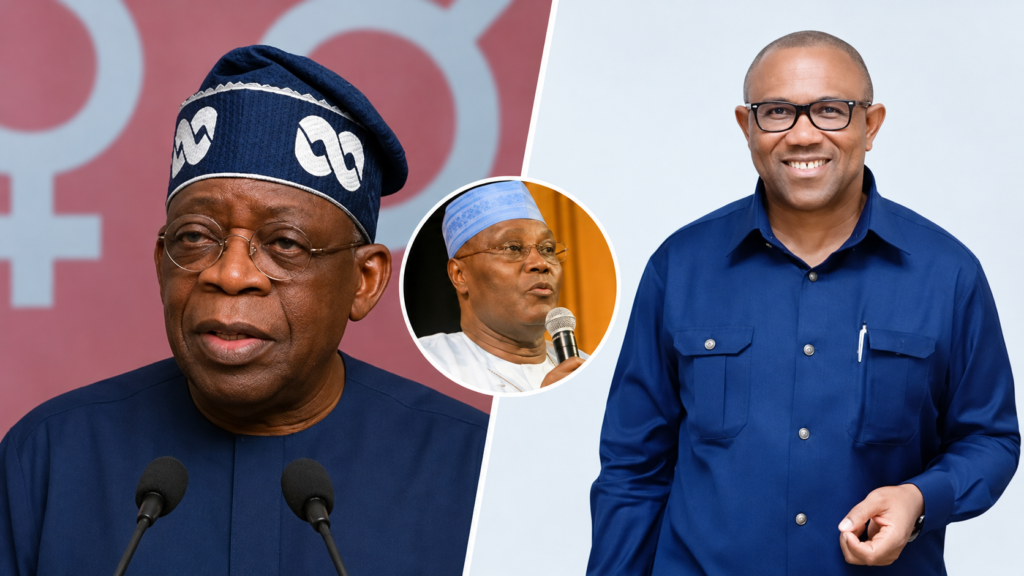
A chieftain of the G-100 political pressure group, Umanu Elijah, has declared that the opposition parties’ plan to present a consensus presidential candidate against President Bola Tinubu in the 2027 general election has failed.
Elijah said the proposal to unite opposition parties behind a single presidential candidate was now “dead and buried”, citing the unwillingness of political actors to abandon their individual presidential ambitions.
Naija News reports that the G-100, a political pressure group convened by former Director-General of the Progressives Governors’ Forum, Salihu Lukman, was established to facilitate a broad-based opposition coalition ahead of the 2027 general election.
The group had argued that opposition parties would struggle to defeat the ruling All Progressives Congress (APC) if they contested the presidential election independently.
According to the group, the APC’s political structures and electoral advantages make it necessary for opposition parties to unite under a common platform and field a single presidential candidate.
As part of its coalition-building efforts, G-100 had held consultations with former Vice President Atiku Abubakar, Labour Party’s Peter Obi and Oyo State Governor Seyi Makinde, among other prominent political figures.
The consultations were aimed at securing an agreement among opposition stakeholders to strengthen their chances of defeating Tinubu in 2027.
However, the proposed arrangement has continued to face uncertainty as opposition politicians pursue their individual political interests, consultations and campaign activities.
Why G-100 Says Opposition Consensus Candidate Plan Has Failed
Speaking in an interview with Punch, Elijah attributed the collapse of the proposed single-candidate arrangement to the failure of opposition politicians to make concessions for a united political front.
He argued that the continued campaign activities of different opposition parties showed that their presidential ambitions remained intact despite efforts to build a coalition.
Elijah specifically referenced the African Democratic Congress (ADC) and the Allied Peoples Movement (APM), noting that their political activities suggested there was little commitment to the consensus proposal.
According to him, the opposition parties have not demonstrated the willingness required to agree on one presidential candidate ahead of the 2027 election.
He said, “The sole candidacy thing is dead and buried. The candidates are not ready to make concessions. You can see what the Allied Peoples Movement is doing. They are going about their campaigns, and none of these candidates is talking about single candidacy.”
His comments represent a significant setback for the G-100’s coalition-building initiative, which was designed to prevent opposition votes from being divided among multiple presidential candidates.
With the 2027 general election approaching, the ability of opposition leaders to resolve their political differences and agree on a common strategy could become a major factor in the contest against the APC.
For now, Elijah’s declaration suggests that the prospect of a consensus opposition presidential candidate remains uncertain, as political parties continue to pursue their individual ambitions.