
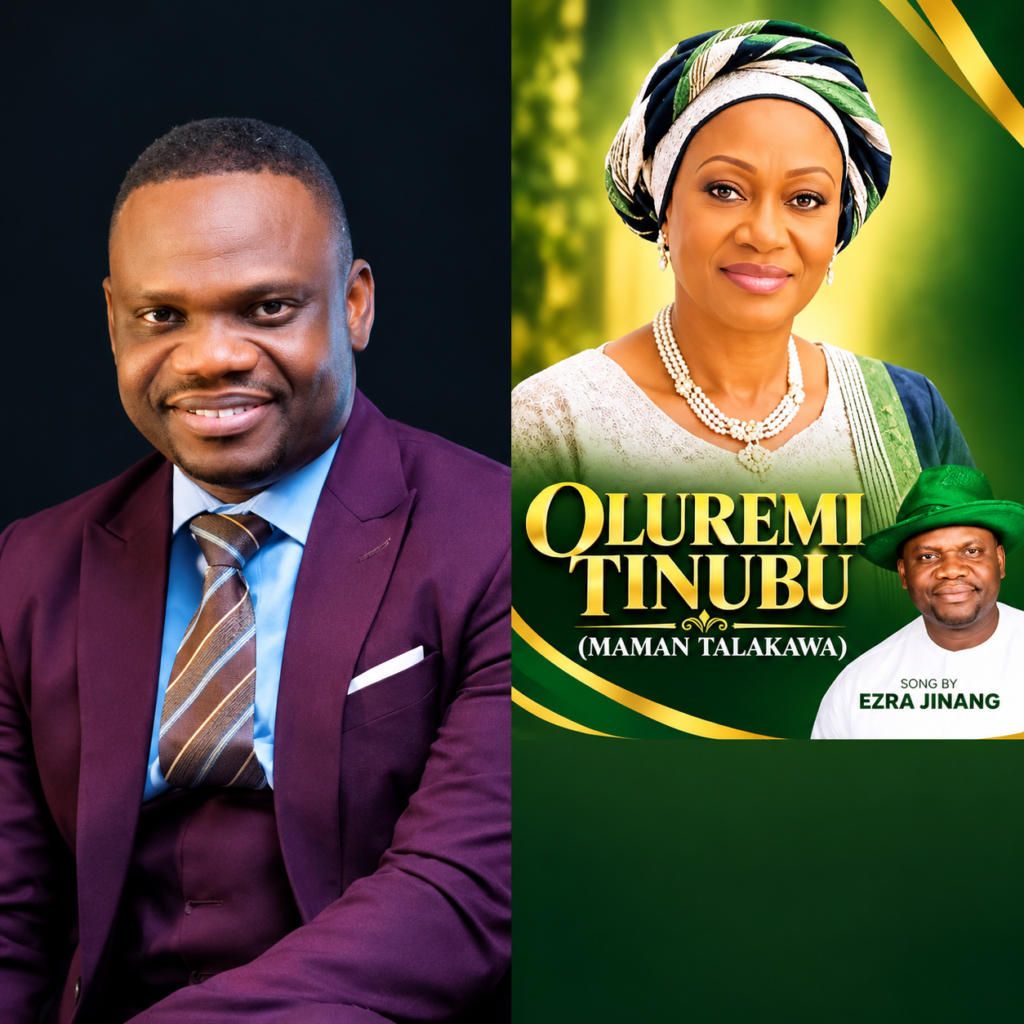
Popular Plateau-based gospel artiste and pastor, Ezra Jinang, has come under criticism on social media following the release of a song praising Nigeria’s First Lady, Oluremi Tinubu, and describing her as the “Maman Talakawa,” a Hausa expression meaning “Mother of the Poor.”
Jinang, who also serves as Special Assistant on Entertainment to Plateau State Governor Caleb Mutfwang, released the song on Saturday ahead of the All Progressives Congress (APC) convention in Kaduna.
However, the song has generated mixed reactions, with several fans and social media users questioning the decision to celebrate the First Lady amid the economic hardship, poverty and insecurity affecting many Nigerians.
While some people believe gospel artistes have the right to express support for political leaders through their music, others argue that such praise should be backed by tangible achievements, particularly when it concerns the welfare of ordinary citizens.
Critics Question Remi Tinubu’s ‘Mother of the Poor’ Title
Several social media users criticised Jinang for describing the First Lady as the mother of the poor, arguing that the title does not reflect the experiences of many Nigerians struggling with the rising cost of living and insecurity.
Some critics also questioned why the gospel minister had not used his platform to speak more openly about attacks on communities and the suffering of residents in Plateau State.
One critic, whose comments circulated on social media, accused the singer of using his influence to seek political favour rather than advocate for vulnerable people.
The critic argued that communities were experiencing attacks and families were grieving, while the singer had chosen to release a song celebrating a political figure.
The comments also questioned the responsibility of influential gospel artistes to speak up for people affected by insecurity and economic hardship.
Comrade Rillz Michael Mangai Questions the Song
Comrade Rillz Michael Mangai also expressed disappointment over the song, describing himself as a longtime fan of Jinang and acknowledging the artiste’s influence as a gospel minister from Plateau State.
Mangai urged the singer to reconsider the message conveyed by the song, particularly its description of Remi Tinubu as the mother of the poor.
He questioned what specific accomplishments justified the title and whether it accurately represented the circumstances of ordinary Nigerians.
Mangai’s criticism centred on the need for public figures to ensure that their messages reflect the realities of the people they claim to represent.
David Ishaya Defends Artistes’ Political Freedom
Another critic, David Ishaya, said gospel musicians should not necessarily avoid politics, acknowledging that artistes have the right to support leaders of their choice.
However, he argued that political loyalty should not take precedence over truth, justice and compassion for people experiencing hardship.
Ishaya urged Jinang to use his musical platform to encourage political leaders to do more for disadvantaged Nigerians rather than simply celebrate their titles.
He maintained that political leaders should be praised for measurable achievements and held accountable when their actions or policies fail to meet public expectations.
Benjamin Jatau Raises Questions About Jinang’s Ministry
Benjamin Jatau also questioned the basis for describing Remi Tinubu as the mother of the poor.
He asked Jinang to identify the First Lady’s specific accomplishments that justified the title and explain how ordinary Nigerians could verify those achievements.
Jatau further questioned whether the singer would use his platform to challenge a politician he supported if that leader failed to fulfil promises affecting vulnerable citizens.
He also raised concerns about maintaining the independence of a gospel ministry while participating in political activities.
In addition, Jatau urged the artiste to use his music to highlight the struggles of hungry families, unemployed young people and communities facing insecurity.
While acknowledging Jinang’s musical talent, Jatau criticised the new song’s quality and suggested that the singer’s recent direction might not reflect his artistic strengths.
Other Critics Accuse Gospel Artistes of Political Praise-Singing
Paul Kunzaar also weighed in on the controversy, arguing that religious leaders and gospel musicians should prioritise truth, righteousness and accountability rather than celebrate politicians accused of corruption.
Kunzaar said the development highlighted what he considered a contradiction between preaching religious values and praising political figures without sufficient regard for their records in public office.
Similarly, Walshak Silas, who described himself as a former fan of Jinang, said the song had changed his perception of the gospel artiste.
Silas criticised the description of Remi Tinubu as the mother of the poor, arguing that it was inconsistent with the hardship many Nigerians face.
He also accused the singer of placing political loyalty above the concerns of ordinary people.
Mixed Reactions Over Gospel Music and Politics
The controversy has reignited debate over the relationship between gospel music, religious leadership and political expression in Nigeria.
While some believe religious musicians should be free to celebrate political leaders they support, others argue that their influence comes with a responsibility to speak about poverty, insecurity and social injustice.
For critics of Jinang’s song, the central question is whether describing a political figure as the mother of the poor is justified by demonstrable contributions to the welfare of ordinary Nigerians.
The backlash also reflects wider public sensitivity to political messaging at a time when many citizens are concerned about the cost of living and security challenges.
Jinang’s release has therefore become a subject of debate not only about the song itself but also about the role gospel artistes should play in public conversations about leadership and accountability.