
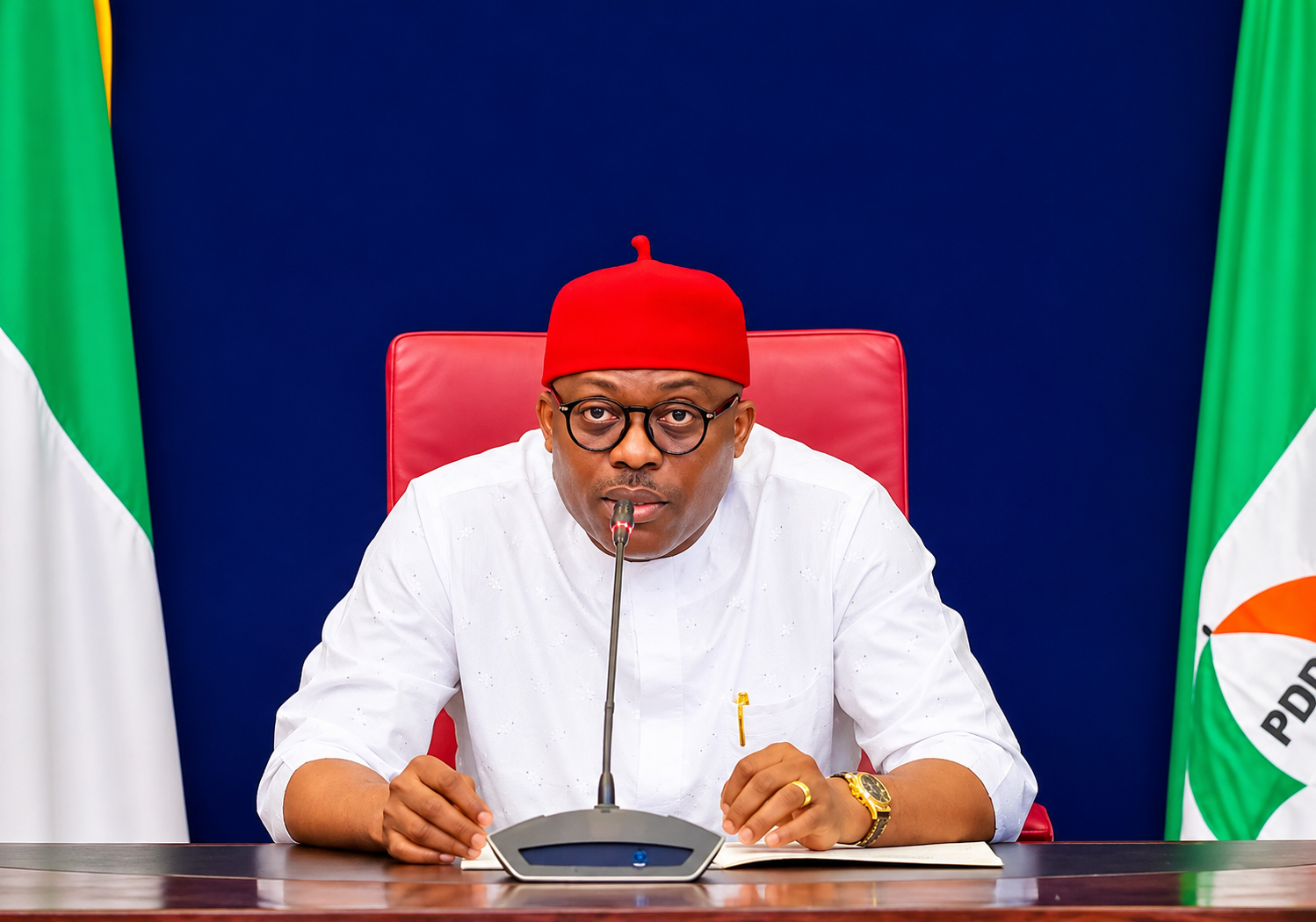
Constitutional lawyer and public affairs analyst, Justice Osai Ahiakwo, has said Governor Siminalayi Fubara’s decision to prioritise peace amid the prolonged political crisis in Rivers State may have prevented the state from experiencing widespread violence.
Ahiakwo made the observation in an opinion article titled “Why Rivers State Isn’t Delta State: The Price of Peace,” in which he examined the governor’s handling of his political confrontation with his former benefactor and Minister of the Federal Capital Territory (FCT), Nyesom Wike.
The analyst argued that Fubara’s restraint, despite sustained political tensions, helped prevent the crisis from escalating into a potentially bloody confrontation.
He compared the political situation in Rivers State with recent incidents of political violence in Delta State, where attacks on opposition gatherings reportedly resulted in deaths, leaving families bereaved and communities fearful.
According to Ahiakwo, political participation should never become a death sentence, stressing that disagreements among political leaders should be resolved through dialogue rather than violence.
Rivers Political Crisis Began With Assembly Explosion
Ahiakwo recalled that the political crisis in Rivers State intensified following the October 29, 2023, explosion and fire at the Rivers State House of Assembly complex.
The incident marked the beginning of an escalating power struggle involving divisions within the state legislature, impeachment threats against Fubara and a bitter political confrontation between opposing camps.
He described the situation as alarming, noting that the crisis had the potential to degenerate into something more devastating.
However, he said Fubara repeatedly appealed for peace despite the growing political tension.
The analyst particularly referenced the governor’s November 2023 address titled “Peace Is Priceless,” during which Fubara apologised to Rivers residents over the anxiety caused by the political crisis and expressed his willingness to make sacrifices to restore stability.
Ahiakwo maintained that the governor’s position should not be interpreted as weakness but as an acknowledgement that the lives and welfare of ordinary citizens were more important than political supremacy.
Peace Agreement Failed to End Rivers Political Tensions
The public affairs analyst also recalled the December 18, 2023, peace agreement brokered at the Presidential Villa, which was expected to resolve the political disagreement between Fubara and Wike’s opposing camps.
Although the eight-point agreement initially offered hope for reconciliation, Ahiakwo said political hostilities continued, with the crisis further destabilising state institutions.
He noted that the prolonged political confrontation eventually culminated in the declaration of emergency rule in Rivers State in March 2025.
Reflecting on the development, Ahiakwo questioned what might have happened if Fubara had responded to every political provocation with equal force, mobilised supporters for street confrontations or insisted on pursuing his political ambitions at all costs.
He argued that such a response could have produced devastating consequences for the state and its residents.
‘No Political Office Is Worth the Life of a Citizen’
While acknowledging that Rivers residents endured political pressure, humiliation and setbacks during the crisis, Ahiakwo said Fubara’s preference for peace over bloodshed should not be mistaken for surrender.
“His ambition may be contested, but no office is worth the life of a citizen,” he said.
He further maintained that Rivers State was bigger than its political leaders and that residents deserved peace irrespective of who occupied the Government House.
Ahiakwo said the difference between Rivers and Delta was not that Rivers State was incapable of experiencing political tragedy, but that restraint may have helped prevent such an outcome.
He concluded that political victories should not be measured solely by the ability to defeat opponents or retain power, but also by the lives and communities protected during periods of political disagreement.
“Sometimes, the greatest political victory is the tragedy that never happened,” he said.