
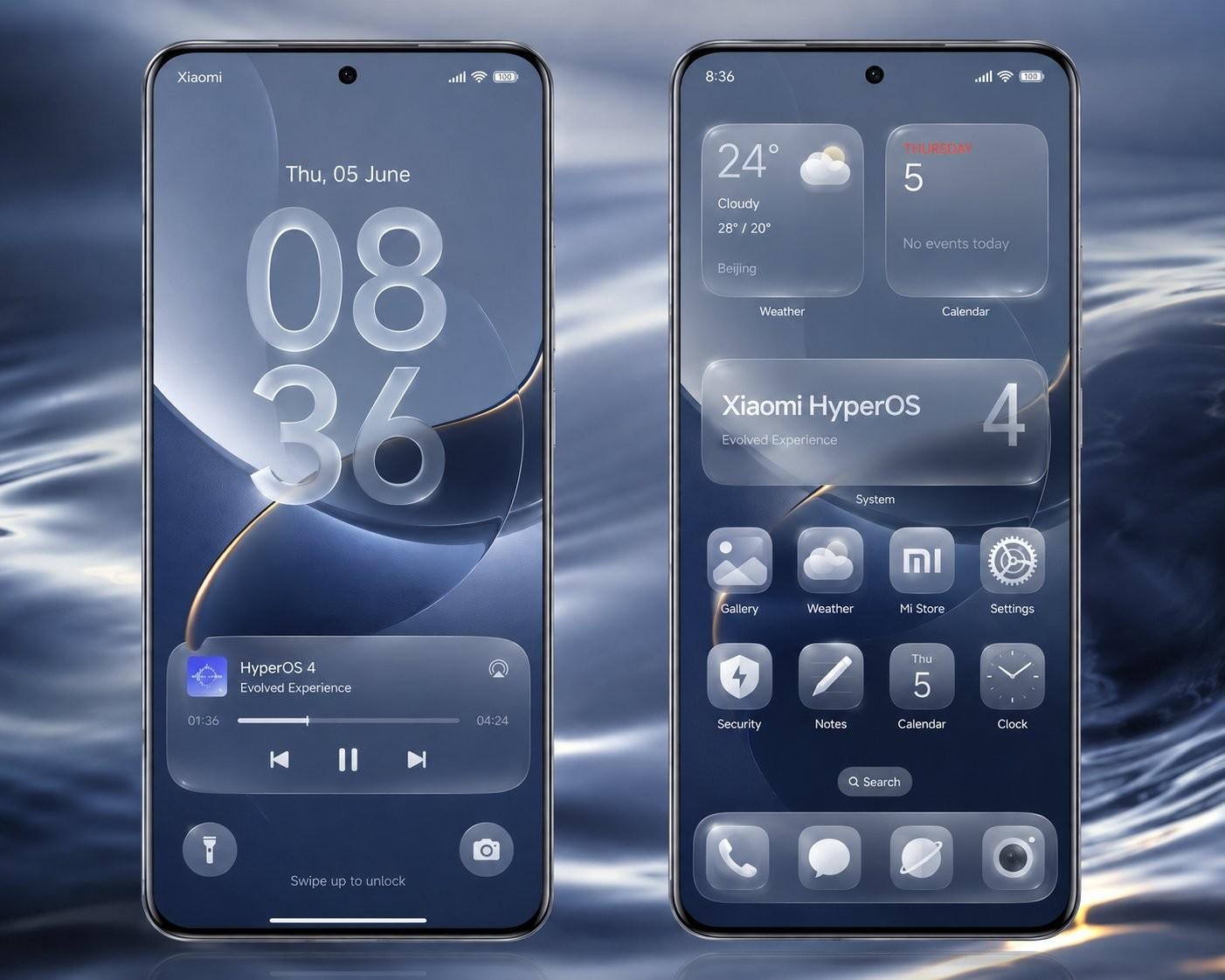
Xiaomi has officially revealed its global rollout schedule for HyperOS 4, confirming that 82 devices across its Xiaomi, Redmi and POCO brands will receive the latest software update.
The rollout covers 67 smartphones and 15 tablets, with the global stable release scheduled to begin in early November 2026 and continue through December.
The list includes recent flagship models, mid-range smartphones and older devices such as the Xiaomi 13T series, which launched in 2023. This means Xiaomi is extending its latest software experience to a sizeable portion of its recent device lineup.
However, not every eligible device will receive all the features announced for HyperOS 4. Availability will depend on hardware capabilities, region, language and software development progress.
Xiaomi HyperOS 4 Rollout Schedule: Three Phases Explained
Xiaomi is distributing HyperOS 4 globally in three waves. The first group is scheduled for early November, the second for mid-November, and the remaining devices are expected to receive the update in December 2026.
Here is the complete list of eligible devices.
Early November 2026
Xiaomi smartphones
- Xiaomi 17 Ultra
- Leica Leitzphone powered by Xiaomi
- Xiaomi 17
- Xiaomi 17T Pro
- Xiaomi 17T
Redmi smartphones
- Redmi Note 15 Pro+ 5G
- Redmi Note 15 Pro 5G
- Redmi Note 15 Pro
- Redmi Note 15 5G
- Redmi Note 15
- Redmi 17 5G
- Redmi 17
- Redmi 17C 5G
- Redmi 15C 5G
- Redmi 15C
POCO smartphones
- POCO F8 Ultra
- POCO F8 Pro
- POCO X8 Pro Max
- POCO X8 Pro
- POCO X8 Pro Iron Man Edition
- POCO M8 Pro
- POCO M8
- POCO C95 Pro
- POCO C85
Tablets
- Xiaomi Pad 8 Pro
- Xiaomi Pad 8
Mid-November 2026
Xiaomi smartphones
- Xiaomi 15 Ultra
- Xiaomi 15
- Xiaomi 15T Pro
- Xiaomi 15T
Redmi smartphones
- Redmi Note 17 Pro Max 5G
- Redmi Note 17 Pro 5G
- Redmi Note 17 5G
- Redmi Note 17
POCO smartphones
- POCO F9 Ultra
- POCO F9 Pro
- POCO F7 Ultra
- POCO F7 Pro
- POCO F7
- POCO X8
- POCO X7 Pro
- POCO X7 Pro Iron Man Edition
Tablets
- Xiaomi Pad 7 Pro
- Xiaomi Pad 7
- Xiaomi Pad Mini
- Redmi Pad 2 Pro 5G
- Redmi Pad 2 Pro
- POCO Pad X1
- POCO Pad M1
December 2026
Xiaomi smartphones
- Xiaomi MIX Flip
- Xiaomi 14 Ultra
- Xiaomi 14
- Xiaomi 13 Ultra
- Xiaomi 13 Pro
- Xiaomi 13
- Xiaomi 14T Pro
- Xiaomi 14T
- Xiaomi 13T Pro
- Xiaomi 13T
Redmi smartphones
- Redmi Note 14 Pro+ 5G
- Redmi Note 14 Pro 5G
- Redmi Note 14 Pro
- Redmi Note 14 5G
- Redmi Note 14
- Redmi 15 5G
- Redmi 15
- Redmi 14S
- Redmi A7 Pro
POCO smartphones
- POCO F6 Pro
- POCO F6
- POCO X8s
- POCO X7
- POCO X6 Pro
- POCO M8s 5G
- POCO M7
- POCO C81 Pro
Tablets
- Xiaomi Pad 6S Pro 12.4
- Redmi Pad 2 9.7
- Redmi Pad 2 9.7 4G
- Redmi Pad 2
- Redmi Pad 2 4G
- POCO Pad C1
Xiaomi notes that these are estimated rollout windows rather than guaranteed installation dates. The order of devices in each category does not necessarily represent the order in which updates will arrive.
Users should also expect regional differences, as availability may depend on the device model, carrier and software variant.
What’s New in Xiaomi HyperOS 4?
HyperOS 4 introduces several changes, with a redesigned interface, improved performance and expanded artificial intelligence features among its biggest additions.
1. A Redesigned Interface With Soft Light Glass
One of the most noticeable changes is Xiaomi’s new Soft Light Glass design language.
The interface introduces translucent panels, layered elements, lighting effects and greater visual depth. Xiaomi has also redesigned notifications, lock screens and home-screen elements.
Other customisation options include resizable home-screen folders and stacked widgets, giving users more control over how their devices look and feel.
The visual direction shares some similarities with Apple’s Liquid Glass design language, although Xiaomi has developed its own implementation.
2. Improved Performance and Responsiveness
Xiaomi says HyperOS 4 brings performance improvements, particularly when launching applications and handling multimedia tasks.
According to the company’s internal laboratory tests, launching 30 applications after nine hours of use took 36.8 seconds on HyperOS 4, compared with 40.3 seconds on HyperOS 3.
HDR photo capture time also improved from 313.38 milliseconds to 240.16 milliseconds.
Meanwhile, the average frame-drop rate during video playback decreased from 2.92% to 1.10%.
These figures are based on Xiaomi’s internal testing using the Xiaomi 17 Ultra, so actual performance may vary across devices and usage conditions.
3. HyperAI Introduces More AI Features
Artificial intelligence is another major part of the HyperOS 4 update.
Xiaomi is expanding HyperAI with tools designed to improve productivity, communication, photo management and content creation.
Some of the highlighted features include:
- AI Voice Notes: Organises voice recordings into structured notes, extracts tasks and generates mind maps.
- AI Speech Recognition: Transcribes and summarises meetings, identifies important points and creates outlines.
- AI Translate Conversation: Supports face-to-face translation to make conversations across languages easier.
- AI Gallery Search: Helps users locate specific images in their photo libraries.
- AI Creativity Assistant: Provides additional AI-powered creative tools.
Xiaomi has also upgraded its Super XiaoAi assistant in China to version 2.0, integrating the company’s MiMo large language model.
However, the Chinese version’s features should not be assumed to be available in the global release.
4. Stronger Privacy and Security Protections
Xiaomi is also introducing additional security measures with HyperOS 4.
These include post-quantum encryption for key delivery in certain end-to-end encryption scenarios, alongside edge-to-cloud AI data security.
The measures are intended to strengthen data protection as more AI features become integrated into the operating system.
However, some protections will only be available on supported devices and services.
Will Xiaomi HyperOS 4 Have a Different Rollout Date in India?
Xiaomi’s published global rollout schedule covers devices outside mainland China, but it does not provide a separate India-specific release calendar.
As a result, Indian users should not assume that every device listed for early November will receive the update on the same day.
The rollout is expected to happen gradually, with timing influenced by regional software variants, carriers and device-specific development progress.
The same consideration applies to other global markets, where the availability date may differ from Xiaomi’s estimated schedule.
Will Every Eligible Device Get All HyperOS 4 Features?
No. Being included in Xiaomi’s HyperOS 4 rollout schedule does not guarantee access to every advertised feature.
Some HyperAI tools will be restricted by device model, region and supported language. Certain interface elements may also vary depending on hardware capabilities.
Storage requirements are another consideration. Notebookcheck reported that the POCO F8 Pro’s HyperOS 4 update exceeded 8GB when installed over the stable HyperOS 3 version.
This means users should ensure they have sufficient free storage before attempting the installation.
Additionally, Xiaomi’s performance figures should be treated as internal laboratory results rather than independent benchmarks. Real-world improvements will depend on the device and how it is used.
Final Thoughts
HyperOS 4 represents a significant software update for Xiaomi’s ecosystem, bringing a redesigned interface, expanded AI capabilities, performance improvements and additional security features.
With 82 devices scheduled to receive the update between November and December 2026, Xiaomi is also extending support beyond its newest flagship smartphones to older models, including the Xiaomi 13T series.
For now, eligible users should monitor their device’s system update settings and wait for the stable release to become available in their region.
You can check Xiaomi’s official HyperOS 4 global rollout announcement for the latest availability information.