
According to a report by The Times of Israel on Wednesday, October 28, 2026, Yair Golan, leader of Israel’s left-wing The Democrats party, has announced plans to hold coalition negotiations with opposition leaders as political parties seek a path towards forming a new government following the country’s latest electoral deadlock.
Speaking to Channel 12 in his first interview since voting ended, Golan said he planned to meet three opposition leaders on Thursday to discuss possible arrangements for establishing a governing coalition. However, he did not disclose the identities of all the expected participants.
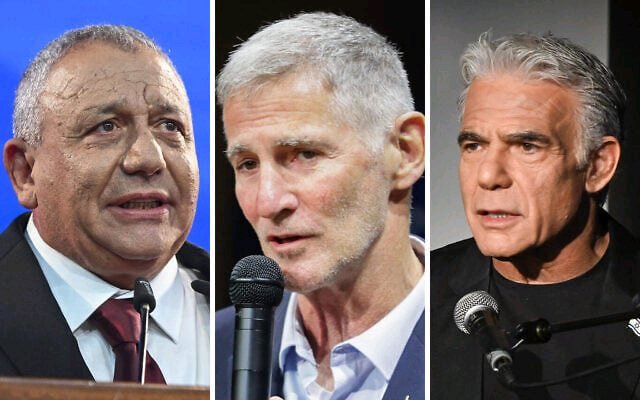
Among those expected to attend the discussions are Gadi Eisenkot, leader of the Yashar party, and Yair Lapid, a senior figure in the opposition B’Yachad party. The proposed meetings are part of broader efforts among opposition groups to explore whether they can reach an agreement capable of producing a parliamentary majority.
Golan belongs to an alliance of four Zionist opposition parties and is reportedly the only leader within the bloc who has publicly supported the possibility of forming a coalition with Arab parties. His position could become significant as opposition leaders consider different political arrangements to overcome the current impasse.
Explaining his plans, Golan told Channel 12, “I hope to meet with all of them by Sunday.” When asked whether Yisrael Beytenu chairman Avigdor Liberman would participate in Thursday’s discussions, he declined to reveal the names of everyone involved.
Golan said he intended to persuade other opposition leaders that they shared a common responsibility to address the country’s political challenges. He described their objective as “an overarching mission: to bring hope to the people of Israel.”
He also argued that forming a new government was necessary to address national security concerns, halt the current administration’s judicial overhaul, and restore confidence among younger Israelis.
According to Golan, uncertainty about the country’s future has left some young people questioning whether they want to continue living in Israel. He highlighted their concerns, saying many were “asking whether they even want to live in this country.”
The negotiations are taking place amid preliminary election figures suggesting that neither Prime Minister Benjamin Netanyahu’s right-wing alliance nor the opposition bloc has a straightforward path to securing a majority in the 120-member Knesset.
High turnout among Arab voters has further complicated coalition calculations, with Arab-led parties projected to win a record 19 seats.
The coming discussions could therefore prove important in determining whether opposition parties can overcome their differences, negotiate potential partnerships, and establish a government capable of commanding parliamentary support.