
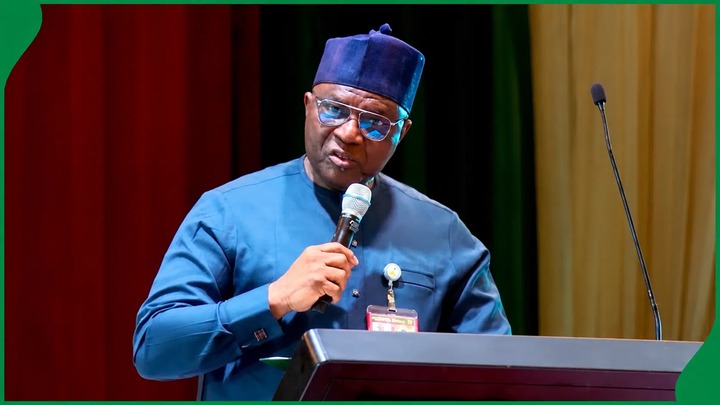
The Special Adviser to President Bola Tinubu on Information and Strategy, Bayo Onanuga, has rejected claims that Nigeria is worse off under the current administration, insisting that the country has recorded significant economic progress since Tinubu assumed office in May 2023.
Onanuga also criticised television presenters who questioned Nigeria’s reported decline in inflation and argued that the government had made little or no progress in addressing the country’s economic challenges.
The presidential media aide accused the journalists of promoting the opposition’s narrative, urging them to visit markets to assess changes in food prices rather than dismissing the government’s claims about improving economic conditions.
Naija News reports that Onanuga made the remarks in a statement shared on X in the early hours of Friday while reacting to an interview on Arise News.
Onanuga Cites Falling Rice Prices Under Tinubu
Defending the administration’s economic policies, Onanuga claimed that food prices had declined significantly, citing the cost of a bag of rice as an example.
According to him, rice that previously sold for as much as ₦120,000 per bag now costs below ₦50,000 in some markets.
He added that the price had dropped to approximately ₦45,000 in his hometown, challenging critics to visit local markets and verify the situation.
“Food prices are crashing. The favourite rice that at a time was selling for N120k a bag has crashed below N50k. In my hometown, a bag now sells for N45K,” Onanuga said.
His comments come amid continuing public debate over the cost of living, food affordability and the impact of the Tinubu administration’s economic reforms on Nigerian households.
Presidential Aide Defends Declining Inflation Figures
Onanuga also defended data from the National Bureau of Statistics (NBS), which he said supported the position that inflation was declining in Nigeria.
He faulted those questioning the reported moderation in inflation, arguing that some commentators continued to repeat claims that the country had experienced no meaningful improvement under Tinubu.
According to the presidential aide, the administration has made “tremendous progress”, despite criticism from opposition figures and sections of the media.
He further argued that the support of 33 state governors for Tinubu demonstrated confidence in the President’s leadership.
“Their position has become so ridiculous that they keep parroting the old narrative, and now they question the NBS data on receding inflation,” Onanuga said.
He maintained that Nigerians should assess economic developments using available data and conditions in the marketplace rather than relying on partisan arguments.
However, a decline in the inflation rate does not necessarily mean that prices have returned to previous levels. It generally indicates that prices are rising more slowly, although the cost of individual goods may fall or increase depending on market conditions.
Onanuga Says Nigeria’s Foreign Reserves Are Near $60 Billion
The presidential media aide also pointed to Nigeria’s foreign reserves, which he claimed were approaching $60 billion, as evidence of progress under Tinubu.
He said the administration had improved access to foreign exchange, enabling businesspeople to obtain the currency required to import raw materials and equipment.
Onanuga further claimed that Nigerians could now use their naira-denominated bank cards abroad, describing this as an improvement compared with the situation before Tinubu became President.
His remarks highlighted foreign exchange availability, external reserves and international payment access as indicators he believes reflect changes in the Nigerian economy.
Onanuga Disputes Claims About Foreign Investment
On investment, Onanuga rejected suggestions by some television presenters that foreign investors returning to Nigeria were mainly portfolio investors.
He argued that the country was also attracting foreign direct investment (FDI), which involves investments in businesses and productive activities and can contribute to employment and economic growth.
According to him, foreign direct investors bring capital into the economy and help create jobs, making their participation an important sign of investor confidence.
Onanuga also stated that Nigerians accounted for almost 90 per cent of participation in the Nigerian stock market.
He maintained that these developments challenged claims that the country had failed to make progress under the current administration.
The distinction between foreign direct investment and portfolio investment is significant. While FDI generally involves a lasting interest in businesses or productive assets, portfolio investment typically involves financial assets such as shares and bonds without the same degree of managerial control.
Tinubu’s Reforms Will Deliver Shared Prosperity, Aide Insists
Onanuga attributed what he described as Nigeria’s economic progress to the foundation laid by Tinubu’s reforms, arguing that the President was positioning the country for greater prosperity.
“Our reserves are close to $60 billion. Nigerians are now able to use their Naira cards abroad, something that was impossible before Tinubu’s presidency,” he said.
The presidential aide added that businesses could now access the foreign exchange needed to import essential materials and equipment.
He also insisted that foreign investors were returning to Nigeria to support economic activities and create jobs, while domestic investors continued to play a significant role in the stock market.
“These facts are clear to anyone not blinded by partisanship and hatred for the leader who has laid a solid foundation for the economy and is poised to take the nation to a higher level of shared prosperity,” Onanuga added.
He warned against what he described as blind partisanship and hostility towards Tinubu, insisting that the President’s economic reforms had established a foundation for long-term growth.
The debate over the administration’s performance continues to centre on inflation, food prices, foreign exchange stability, investment and the broader impact of economic reforms on living standards.
While Onanuga maintains that the country is making significant progress, the extent to which these developments translate into improved purchasing power and better living conditions for ordinary Nigerians remains an important part of the national economic debate.