
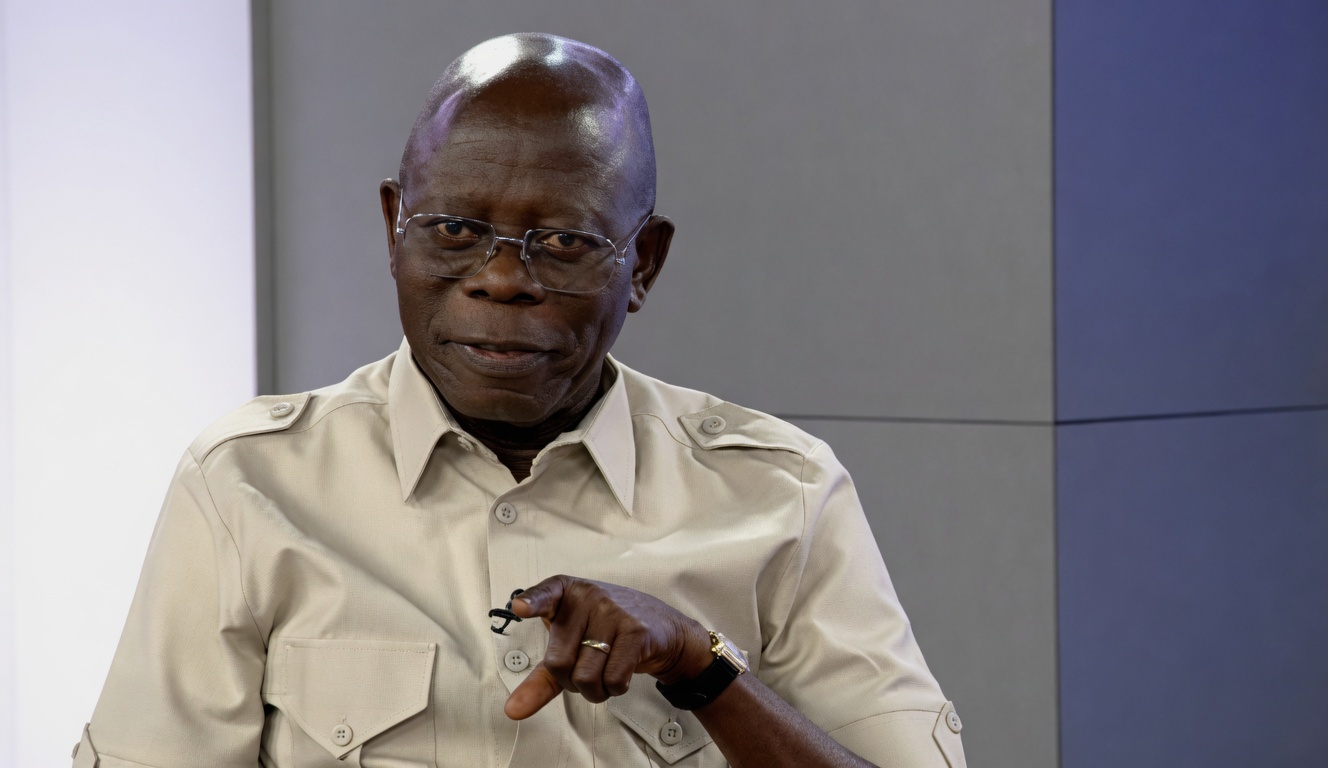
Adams Oshiomhole, senator representing Edo North, has questioned Peter Obi’s claim that he saved about $150 million for Anambra State during his tenure as governor, raising concerns about how the funds were accumulated and whether the former governor borrowed money while in office.
Oshiomhole, a former Edo State governor and ex-national chairman of the All Progressives Congress (APC), made the remarks during an interview with Symfoni TV published on Thursday.
The senator questioned how Obi could have accumulated dollar savings when the Federal Government disburses statutory allocations to states in naira.
According to Oshiomhole, he and Obi were members of the National Economic Council, chaired by the vice-president, when state governors proposed receiving their allocations in dollars because of the disparity between the official and market exchange rates.
He said the Federal Government rejected the proposal, maintaining that the naira remained Nigeria’s recognised currency.
“Where did you get dollars to save? Did you receive naira from Abuja and go to bid for dollars to save for Anambra State?” Oshiomhole asked.
Oshiomhole Challenges Obi’s Claim of Not Borrowing
The Edo North senator also disputed Obi’s claim that he did not borrow money while serving as Anambra governor, arguing that loans and World Bank facilities could create financial obligations even when repayment was deferred.
Oshiomhole said he accessed World Bank facilities during his tenure as Edo governor, including financial instruments described as budget support.
He argued that the timing of repayment does not determine whether an arrangement constitutes a loan, noting that outstanding obligations may eventually have to be settled by a successor administration.
“If you are not paying it immediately, it’s not a loan? It’s in the books, and a future government will necessarily pay it anyway,” he said.
Oshiomhole further explained that repayment moratoriums could allow a governor to leave office before a loan becomes due, leaving the incoming administration responsible for meeting the financial commitment.
He said he believed this was the point Anambra State Governor Chukwuma Soludo was attempting to make when discussing Obi’s financial record.
Senator Calls DMO Recognition Claim ‘Another Lie’
Oshiomhole also criticised claims surrounding Obi’s borrowing record, referring to a reception reportedly organised by the director-general of the Debt Management Office (DMO) to acknowledge the former governor for allegedly not submitting loan applications for approval.
The senator described the claim as “another lie”. However, the interview excerpt did not provide further details or documentary evidence to substantiate his allegation.
His comments add to the ongoing debate over Anambra State’s finances during and after Obi’s administration, particularly regarding the former governor’s reported savings and the liabilities inherited by subsequent governments.
Peter Obi Maintains He Left Anambra Without Debt Burdens
Obi, who served two terms as Anambra governor before leaving office in 2014, has consistently maintained that he left the state in a strong financial position and did not burden it with debts.
The former governor reiterated his position during a recent interview on Arise TV, responding to allegations that his administration left outstanding loans and other financial liabilities.
However, Law Mefor, Anambra State commissioner for information and value reorientation, previously said Obi left an external debt of $123.77 million at the end of his tenure.
The competing claims have fuelled questions about the state’s financial position at the end of Obi’s administration, including the distinction between cash savings, external debt and other outstanding obligations.
While Oshiomhole has challenged Obi’s account of the savings and borrowing, the allegations and responses remain contested. Establishing the state’s financial position would require examining relevant government records, debt statements and financial disclosures from the period.
The controversy continues to draw attention to public debt transparency, the management of state resources and the financial records of former governors in Nigeria.