
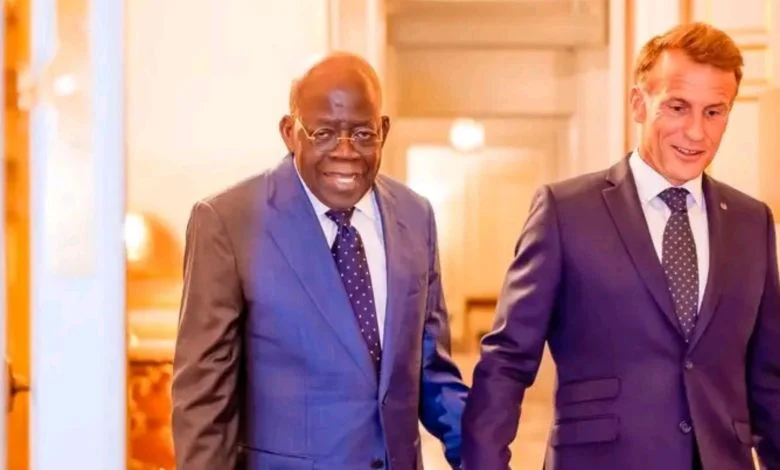
Former South-East presidential spokesman Denge Josef Onoh has urged French President Emmanuel Macron to suspend his planned state visit to Nigeria and address France’s domestic challenges before embarking on further diplomatic engagements abroad.
Onoh made the appeal in a statement on Sunday, arguing that Macron should prioritise the concerns of French citizens amid reports of unrest in the European country.
According to Politics Nigeria, Macron is expected to visit Nigeria on October 28 and 29, 2026, for a two-day state visit aimed at strengthening bilateral relations between both countries.
Onoh questioned the timing of the planned trip, maintaining that effective leadership requires governments to address pressing domestic concerns before pursuing international engagements.
He argued that proceeding with the visit while France faces internal challenges could raise questions about Macron’s priorities and responsibility to the French people.
“True statesmanship requires prioritising the home front when the foundations are shaking,” Onoh said.
He added that the French president should focus on addressing concerns at home rather than pursuing diplomatic engagements in Abuja while unrest continues in France.
Onoh also expressed sympathy with the French government and citizens, noting that the situation was troubling for those who consider France home or have experienced its culture, traditions and hospitality.
He warned that prolonged unrest could threaten the social fabric underpinning France’s cultural heritage, urging the government to prioritise enduring national values over temporary political considerations.
“It is time for the French government to focus on enduring French values over temporary political values,” he said.
Onoh Raises Concerns Over Nigeria’s 2027 Elections
The former presidential spokesman also questioned the appropriateness of Macron’s planned visit at a time when Nigeria is preparing for the 2027 general elections.
He argued that Nigeria should concentrate on resolving its domestic challenges and ensuring that the forthcoming elections produce leadership capable of rebuilding the economy and restoring public confidence in government institutions.
According to Onoh, both countries should carefully consider their domestic priorities before proceeding with major diplomatic engagements.
“Nigeria has its problems, and it is the sole responsibility of Nigerians to focus on and solve their own problems,” he said.
He maintained that the planned visit could become a distraction if the two governments failed to give adequate attention to the challenges confronting their respective countries.
Onoh stressed that Nigeria remained open to international partnerships but needed dependable diplomatic partners capable of managing domestic affairs while pursuing cooperation abroad.
Onoh Cites Previous French Crises
To support his argument, Onoh referred to previous periods when domestic unrest affected France’s diplomatic engagements.
He cited the postponement of a planned state visit by Britain’s King Charles III to France in March 2023 amid widespread protests against pension reforms.
The visit was delayed as demonstrations intensified over the proposed changes to France’s pension system.
Onoh also referenced the civil unrest of May 1968 under former French President Charles de Gaulle and the suburban riots of 2005 under former President Jacques Chirac.
He argued that these historical events demonstrated how domestic instability could require governments to redirect their attention towards urgent national concerns.
The former presidential spokesman urged Nigeria’s presidency to consider the implications of France’s domestic situation for the planned state visit, particularly regarding potential agreements covering the economy, energy and security.
“We love diplomacy, and Nigeria remains a premier destination for global partnerships. However, we need a French President who is stable at home to partner with us effectively abroad,” he said.
Onoh called on Macron to remain in France, engage with protesters and address their grievances before rescheduling the Nigerian visit for a more appropriate time.
Why Macron’s Planned Nigeria Visit Matters
Macron’s expected visit to Nigeria is intended to strengthen relations between both countries and consolidate agreements reached during President Bola Tinubu’s previous visit to France.
The planned trip would be Macron’s first visit to Nigeria since July 2018, when he visited the country during the administration of the late President Muhammadu Buhari.
It would also follow Tinubu’s three-day state visit to France in November 2024, during which both leaders discussed areas of mutual interest, including finance, energy transition, solid minerals, trade, investment and communications.
Presidential spokesperson Bayo Onanuga previously said Tinubu’s visit was intended to strengthen political, economic and cultural relations between Nigeria and France while creating additional opportunities for cooperation.
The anticipated October 28–29 visit is therefore significant for ongoing diplomatic relations and potential cooperation across several strategic sectors.
Macron, who assumed office in 2017, is due to complete his second and final presidential term in May 2027. He has maintained diplomatic relations with Tinubu since the Nigerian leader assumed office in 2023.
As preparations for the planned visit continue, Onoh’s appeal has raised questions about the timing of the engagement and the balance between domestic priorities and international diplomacy.
However, his call for postponement represents his position on the planned visit and does not, in itself, indicate that the French government has cancelled or rescheduled the trip.