
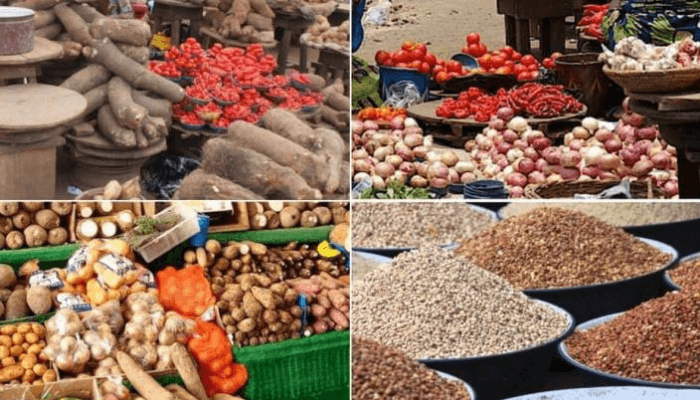
Lagos, Imo and Ondo recorded the highest annual food inflation rates among Nigerian states in September 2026, while Taraba and Yobe recorded negative rates, according to data from the National Bureau of Statistics (NBS).
The figures highlight significant differences in food price movements across the country, with annual food inflation exceeding 30% in four states, while some states recorded considerably lower rates or declines compared with September 2025.
According to the NBS, Nigeria’s food inflation rate stood at 19.59% in September 2026, down from 20.16% recorded in the corresponding month of 2025.
On a month-on-month basis, food inflation fell to -1.55% in September from 1.02% in August, indicating a decline in average food prices during the month. However, the extent of price changes varied across states.
Lagos, Imo, Ondo Record Highest Food Inflation
Lagos recorded the highest annual food inflation rate in September at 34.4%, followed by Imo at 33.8% and Ondo at 31.5%.
Delta ranked fourth with 30.6%, while Benue recorded 27.3%. Rivers, Ebonyi, Osun, Oyo and Ogun completed the list of the 10 states with the highest annual food inflation rates.
The rankings indicate that residents in these states continued to face substantial food price increases compared with the same period in 2025.
Top 10 States With the Highest Food Inflation in September 2026
The NBS figures show the following annual food inflation rates:
- Lagos — 34.4%
- Imo — 33.8%
- Ondo — 31.5%
- Delta — 30.6%
- Benue — 27.3%
- Rivers — 26.8%
- Ebonyi — 25.7%
- Osun — 25.2%
- Oyo — 24.5%
- Ogun — 24.2%
Lagos led the ranking, with its annual food inflation rate standing 14.81 percentage points above the national rate of 19.59%.
Taraba, Yobe Record Lowest Food Inflation Rates
At the other end of the ranking, Taraba recorded the lowest annual food inflation rate at -7.5%, followed by Yobe at -0.4%.
Negative annual food inflation rates indicate that the measured food prices were lower than those recorded in the corresponding period a year earlier. However, this does not necessarily mean that all food items became cheaper or that food was affordable for every household.
Borno recorded an annual food inflation rate of 2.2%, while Bauchi and Nasarawa both posted 5.3%. Kebbi, Sokoto, Jigawa, Kogi and Bayelsa also featured among the 10 states with the lowest rates.
Top 10 States With the Lowest Food Inflation in September 2026
The states and their reported annual rates were:
- Taraba — -7.5%
- Yobe — -0.4%
- Borno — 2.2%
- Bauchi — 5.3%
- Nasarawa — 5.3%
- Kebbi — 5.4%
- Sokoto — 6.1%
- Jigawa — 8.1%
- Kogi — 8.6%
- Bayelsa — 9.3%
Taraba recorded the lowest rate in the country, while Yobe was the only other state on the list with a negative annual food inflation figure.
Nigeria’s Monthly Food Inflation Turns Negative
The national food inflation figures also showed a change in monthly price movements.
Food inflation declined to -1.55% in September 2026 from 1.02% in August, suggesting that average food prices fell over the month covered by the report.
Meanwhile, the annual rate eased to 19.59% from 20.16% in September 2025.
The figures illustrate the difference between annual and monthly inflation. While annual food inflation measures price changes compared with the same month a year earlier, month-on-month inflation tracks changes from the preceding month.
Consequently, a decline in monthly food prices does not automatically mean that food prices have returned to their levels of a year earlier.
Rice Prices Decline Across Major Categories
In a related development, Legit.ng previously reported that rice prices in Nigeria declined across major categories in September 2026, according to reported price data.
Imported long-grain rice recorded one of the sharpest reductions, with the average price of a 50kg bag falling from N56,093.75 in August to N54,328.13 in September.
This represented a decline of N1,765.62, or approximately 3.1%, within the month.
The average price of a 50kg bag of Nigerian-manufactured rice also decreased from N52,250 to N51,571.43, while imported short-grain rice fell from N52,300 to N50,950.
The reported rice price declines align with the broader monthly moderation in food inflation, although individual food items and prices may move differently across markets and states.
What the Food Inflation Figures Mean for Nigerians
The September 2026 figures show that food price pressures remain uneven across Nigeria.
Lagos, Imo and Ondo recorded the highest annual rates, while Taraba, Yobe and Borno were among the states with the lowest rates.
Although the national month-on-month food inflation rate turned negative, the annual rate remained at 19.59%. The data therefore point to a recent monthly decline in average food prices alongside higher prices than a year earlier at the national level.
For households, the impact will depend on the food items they purchase, local market conditions and how prices change in their respective states.